OPSB Family Resource Hub
  • About
  • For Providers
  • Product Resources
  • Blogs
  • Find a Clinic
Search Search
  • Scoliosis
  • Clubfoot
  • Lower Limb
  • Hip Dysplasia
  • Plagiocephaly
  • Femur Fracture
  • Prosthetics & Limb Difference
  • Surgical Resources
  • Menu Menu

Alma’s Story: How a Young Girl with Clubfoot Found Her Place in the Game

almas clubfoot story

Alma always watched her sisters chase soccer balls, swing bats at softball practice, or play made-up games in the street. She didn’t just want to be part of the crowd; she wanted to run alongside them, to belong, to feel included. Born with bilateral clubfoot, Alma faced a challenge that could have easily kept her on the sidelines. But her determination, paired with the right support and treatment, changed everything.

Childhood and the Desire to Belong

For kids, family games mean more than fun; they build confidence and belonging. Alma grew up in a busy, sports-loving household, always trying to keep up with her older sisters, Maggie and Addie. While they played outside, she watched from the porch, wishing, watching, waiting, for the moment she could join in.

She wanted to be out in the yard playing soccer with Maggie. She wanted to grab a bat and join Addie for a game of softball. When the street filled with laughter and her family set up “wiffle ball,” Alma’s heart tugged—she wanted to be there, running with them.

These moments weren’t just about sport, but about feeling included and sharing joy with her loved ones. And for Alma, it was about even more, it was about shaking off limitations and being more than a spectator.

Understanding Clubfoot and Its Impact on Play

Clubfoot is a condition present at birth where a baby’s foot twists out of its normal position. In Alma’s case, both of her feet were affected. Alma’s dream to join in family fun meant first treating her special feet, so her feet would not only look ordinary but to move freely, run, and play. For Alma that solution came in the form the Ponseti Method for clubfoot treatment and the use of boots and bar, clinically called the Mitchell Ponseti Ankle-Foot Orthosis (AFO) and bars.

These devices did two main things:

  1. Corrected Foot Position: Guiding the feet into a proper position over time
  2. Maintained Progress: Prevented the feet from turning back in after treatment

Wearing the boots and bar wasn’t just about standing tall the next morning—it was her ticket to play. Alma slipped them on every night, shaping the future she could see but hadn’t reached just yet. The experience wasn’t always comfortable or easy, but the hope of waking up ready to join in family games made it worth it.

Learn more about the Mitchell Ponseti AFO and bar and how it helps children just like Alma.

Overcoming Challenges: Alma’s Nightly Routine and Determination

Every evening, Alma’s journey to the game began with her nightly routine. She developed a rhythm—one that became second nature and showed her strength, even at a young age.

Here’s what her nights typically looked like:

  1. Alma ‘s parents carefully strapped on her boots and bar before bed.
  2. She crawled under the covers, the brace making ordinary movements more difficult, yet becoming routine as part of her daily life.
  3. Overnight, her legs and feet maintained the correct position they achieved through serial casting when she was a baby.
  4. Each morning, the boots and bar came off, replaced with growing mobility and confident in her ability to join in families play.
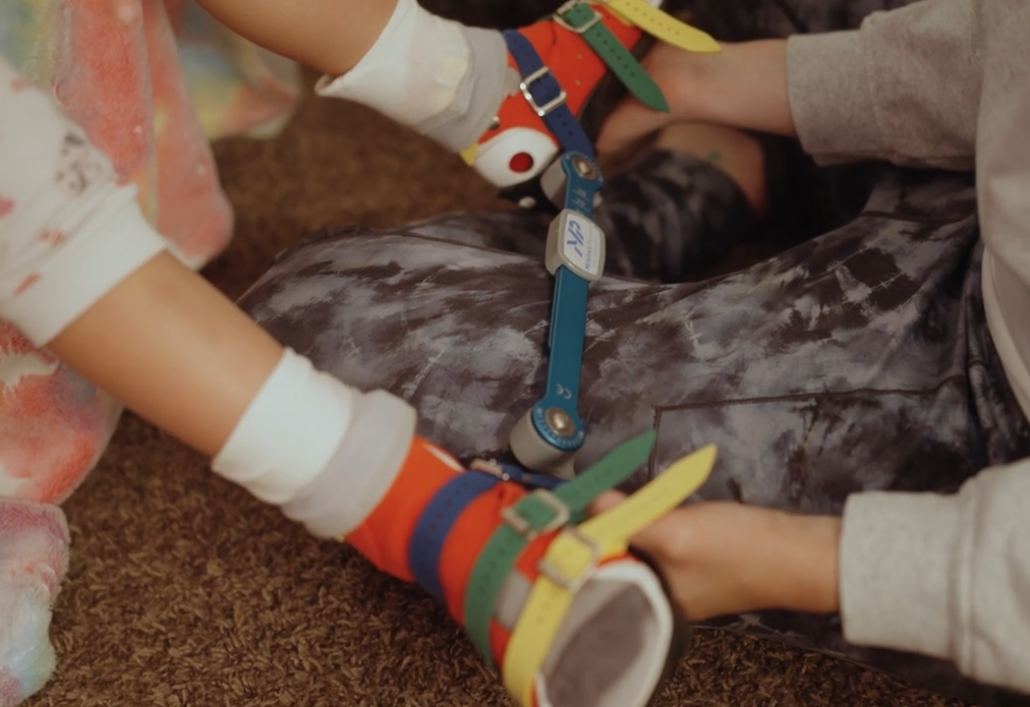
Some nights were tough. At times, the brace felt heavy and awkward. A. But she never skipped a night. She knew every evening spent in the boots and bar was an investment in the games, laughter, and freedom of movement waiting for her.

Persistence turned into progress. Alma’s simple but powerful routine, repeated night after night, laid the groundwork for everything that followed.

From Spectator to Player: Alma’s Active Participation

After weeks, months, and years of wearing her corrective brace, Alma continued to grow in her ability to participate in her family’s games. With her feet growing stronger and her confidence building, she stepped into the world of family sports and games.

When her family planned a street game of “wiffle ball,” Alma lined up right next to everyone else. Instead of being an observer, she was a teammate. The feeling of gripping a bat, running bases, and laughing with her sisters brought her a tremendous sense of joy. It wasn’t just about the game—it was about becoming part of the game.
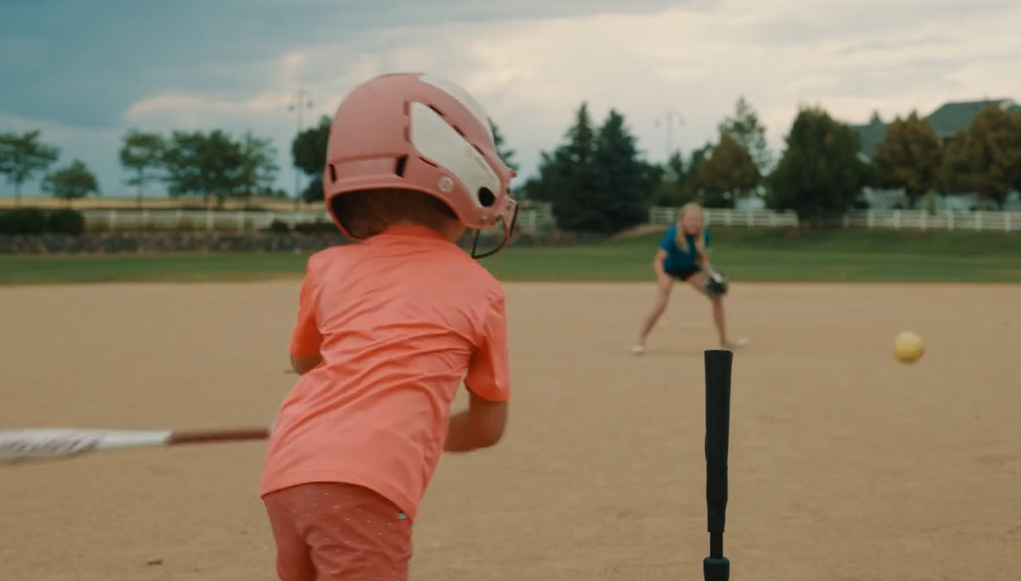
“Now I’m not just watching the game—I am a part of it.”

That’s how Alma described her new life. The right treatment didn’t only reshape her feet—it reshaped her childhood. Like any other kid, she could chase a ball, cheer with her family, and feel the rush of the game.

Adaptive equipment made all the difference for Alma. It let her have the kind of playful, active childhood every kid deserves.

The Role of Family in Alma’s Journey

Alma’s family played a lead role in her progress, offering encouragement and making sure she never felt left out, even when there were challenges.
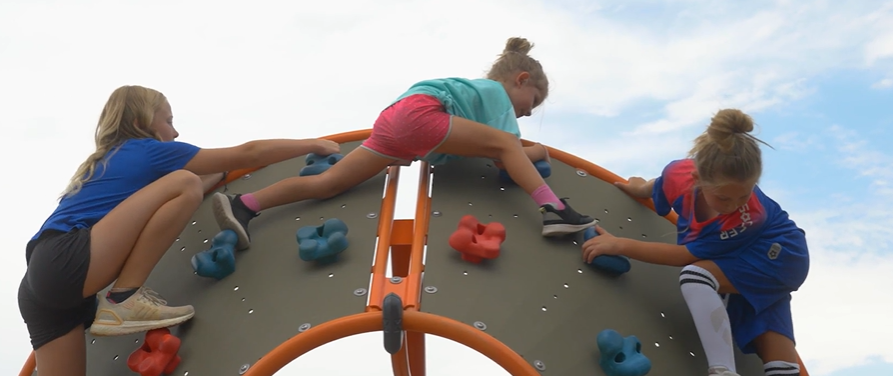
Some examples of their support include:

  • Creating inclusive games where everyone could participate
  • Celebrating Alma’s efforts on and off the field
  • Helping her stay positive during tough nights with her boots and bar
  • Always inviting her to join, no matter how she felt or moved

Having a supportive, active family meant that Alma’s journey was never a lonely road. Her sisters—Maggie and Addie—weren’t just athletes to watch, but role models and playmates who showed her what was possible.

With them, Alma learned that every step forward, no matter how small, mattered.

Conclusion

Alma’s clubfoot journey isn’t about medical devices or diagnoses—it’s about hope, family, and the power of persistence. Starting as a spectator, Alma’s daily commitment turned dreams of joining her sisters into real memories on the field and street. Her story proves that with the right support and tools, every child can move from the sidelines to the center of the game.

Whether you know a child with a physical challenge or want to understand how inclusion shapes young lives, Alma’s story is a heartfelt reminder: everyone deserves a chance to play, belong, and find their place in the game.

Disclaimer:

OPSB products and products distributed by OrthoPediatrics Corp. should be used under the guidance of qualified healthcare professional. Individual results may vary. Please consult your pediatrician or orthopedic specialist for professional advice, including intended use, warnings, precautions, side effects and contraindications. This video is for informational purposes only and does not constitute medical advice. Always follow your doctor’s recommendations and instructions.
https://family.opsb.com/wp-content/uploads/sites/2/2025/10/almas-clubfoot-story.png 443 767 mhoff /wp-content/uploads/sites/2/2026/03/family-resource-hub-logo.png mhoff2026-02-23 18:33:142026-03-27 16:37:45Alma’s Story: How a Young Girl with Clubfoot Found Her Place in the Game

Debbie’s Prosthetic Journey: A Spina Bifida Success Story With OPSB

Every family’s path is different, especially when a child is born with medical challenges. But some stories stand out for the love, teamwork, and hope at their core. Debbie’s journey with spina bifida, her transformation after a major surgery, and her family’s experience with pediatric prosthetic experts at OPSB combine to offer guidance and hope for other families on a similar path.

Debbie’s Early Challenges with Spina Bifida

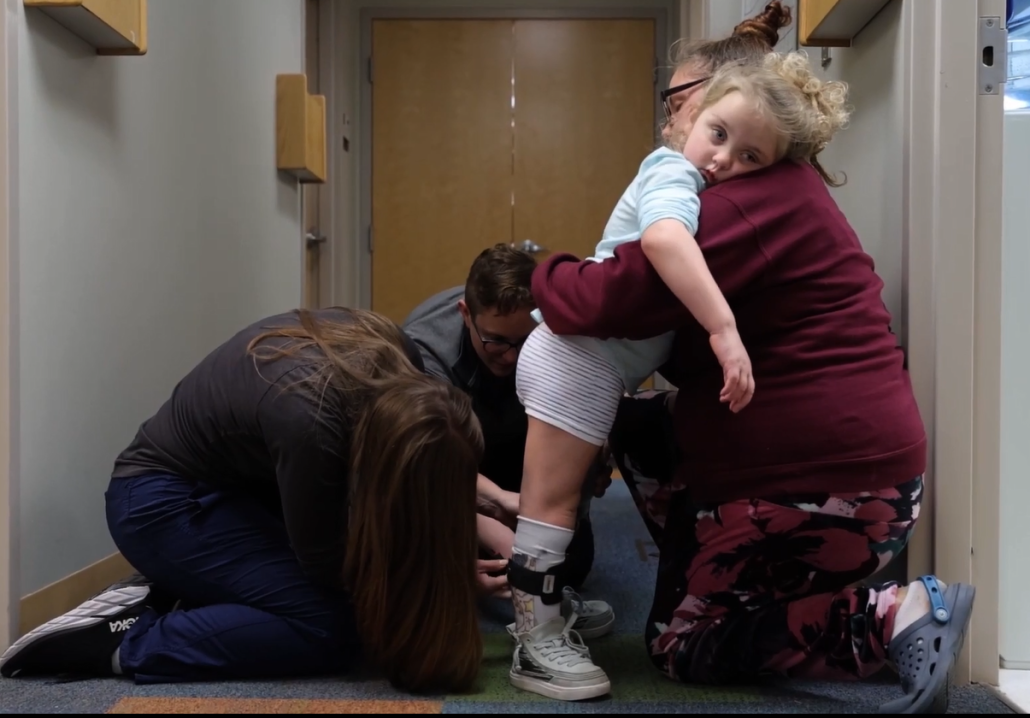
Debbie’s story began with her arrival into the world, bringing with it both joy and sudden, unexpected challenges. Debbie was born with spina bifida meningocele, a form of spina bifida where the spinal cord lining pushes out but is covered by skin. For her family, the first look at her legs was hard. She had a severe contracture in one leg—her foot bent up tight, pressing against her bottom at a 90-degree angle.

Her mom determined to give Debbie every chance, started the long process of . For two years, doctors and therapists tried to stretch and reshape her leg using a series of casts and braces. They saw some progress, with the angle improving to about 45 degrees, but time and time again, the tightness returned. Each time the casts came off, her leg would curl back.

This time was tough for both Debbie and her mom. Watching your child struggle, especially when therapy, orthopedic treatments, and bracing  brings only a little relief, brings its own kind of heartache. Still, her family pushed on, always hoping for a breakthrough.

A Life-Changing Decision

After two years, Debbie’s mom stood at a crossroad. Would another year bring more progress, or would they need to try something new? Together with her doctors and the OPSB team, they made the hard decision: at age two, Debbie would have a knee disarticulation surgery. This meant removing her leg at the knee joint, but without cutting the bone. The hope was that, with a prosthetic limb, Debbie could finally find freedom and movement.

Decisions like these aren’t easy. The thought of amputation is frightening for any parent. But Debbie, and her family leaned into her trusted relationship with the OPSB team to answer questions about questions about life with a prosthesis, so they felt prepared, educated, and ready for this big change.

Life After Knee Disarticulation and Prosthetic Use

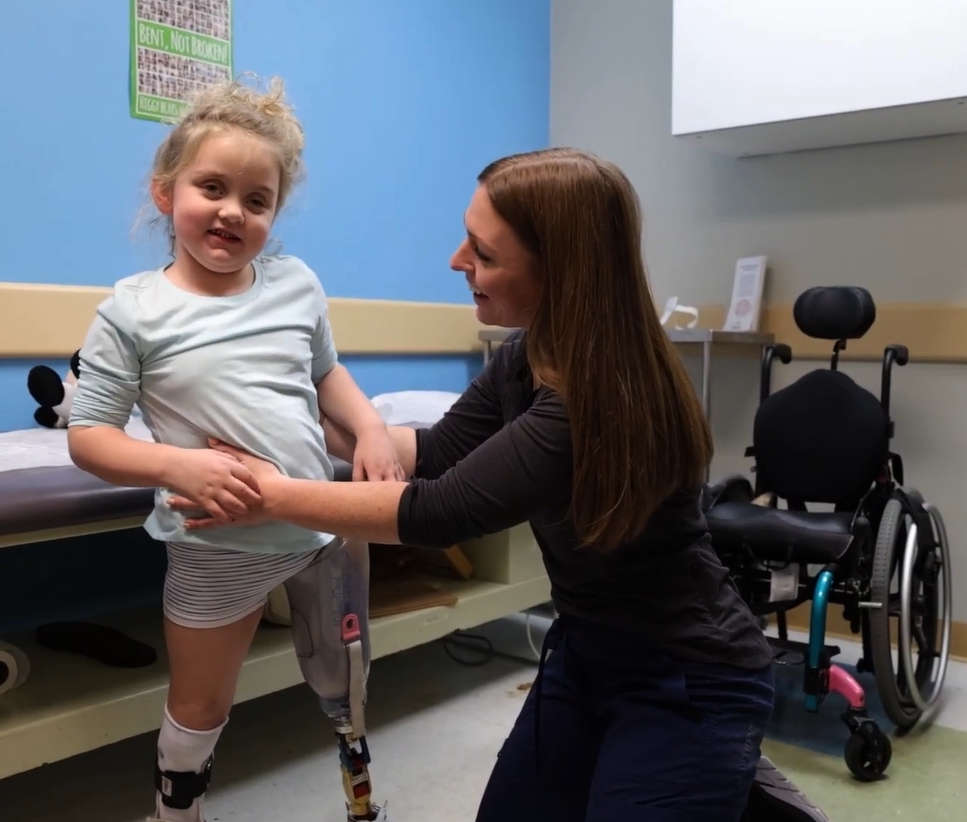
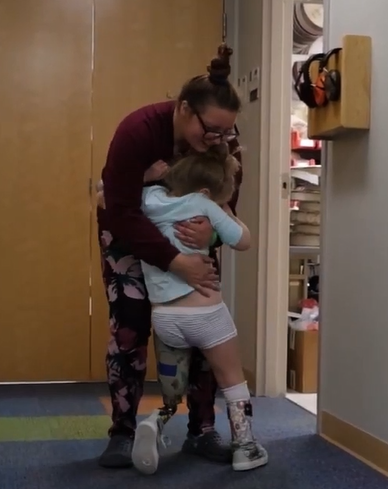
The impact of this decision was clear as Debbie recovered and began using her prosthesis. Shortly after surgery, her life looked very different. No longer held back by her contractures, Debbie accomplished something that once seemed out of reach: she took her first independent steps.

Seeing Debbie walk on her own for the first time was a turning point for her family. Her mom remembers the thrill clearly, saying, “That first day she took those steps, it was just amazing. So I knew I made the right choice at that point.”

Today, Debbie is a joyful child who plays, explores, and rarely slows down. With her new leg, she fits right in with her friends. She doesn’t let her prosthesis hold her back and rarely even thinks about it.

Trusted Support: The Role of the Pediatric Certified Prosthetist Orthotist

From the very start, Debbie and her family worked closely with Lauren, a pediatric Certified Prosthetist Orthotist (CPO) at OP Specialty Bracing. Lauren first met Debbie when she needed an Ankle Foot Orthosis (AFO) as an infant, and a KAFO (knee ankle foot orthosis) for her contractures. Over the years, Lauren became more than just a healthcare provider. She listened, offered ideas, and became a partner in Debbie’s progress.

Debbie’s mom shares, “We click, we just click. I don’t know how else to explain it. I feel comfortable and I feel like I can express my concerns… She really listens and goes above and beyond.” This trust made a difference every step of the way, especially when it came time to make life-changing decisions.

Today, clinic visits are a highlight for Debbie—the team has turned what could be a stressful experience into something positive. “She’s not scared to go. She loves coming here; it’s like a fun day trip for her,” her mom says.

The Collaborative Care Team and Support System


What makes Debbie’s story even stronger is the collaborative environment at OPSB and their connections with CHOP (Children’s Hospital of Philadelphia). Care at this clinic means more than just fitting a device It involves teamwork among doctors, therapists, prosthetists, orthopedic surgeons, rehab specialists, and, importantly, parents.

Having this network made a real difference. When Debbie’s family faced the decision about amputation, they could ask questions and talk with everyone involved. Krista, Debbi’s mom, was a key team member in advocating for her daughter. She worked closely with the CHOP and OPSB specialists to gather input from every corner, ensuring no voice was left out.

How Communication Builds Better Care

Open and regular communication made all the difference. Debbie’s mom could share daily observations about what was working and what wasn’t. This allowed the care team to brainstorm solutions and fine-tune Debbie’s braces and prostheses.

Key communication points included:

  • Families sharing daily challenges and successes
  • Team members brainstorming possible solutions
  • Coordination among doctors, therapists, and prosthetists
  • Making sure parents steer decisions about their child’s care

Lauren emphasizes, “Parents know best.” Healthcare providers don’t make decisions for families. Instead, they give all the details, options, and support—so the family can choose what’s right for their child.

Debbie’s mom says this teamwork made her feel safe and confident. She never felt alone or unheard. “It’s like she knows what I’m thinking, with the braces and prostheses, she goes above and beyond… I know we’re in the right spot for her. I feel it in my gut.”

Advice and Insights for Other Parents

Walking this path means facing tough choices. Debbie’s story is a reminder for other parents to stay informed, ask questions, and trust their instincts.

Here’s some practical advice for any parent navigating medical decisions for their child:

  1. Ask many questions. Don’t hesitate to seek details about your child’s diagnosis and all possible treatments.
  2. Request clear explanations. Don’t settle for jargon—ask until you understand.
  3. Expect real listening. Your concerns and ideas should be welcomed by the care team.
  4. Gather input from everyone. Don’t just rely on one opinion—pull together insights from all the specialists involved.

The biggest message is to trust your gut and keep searching until you feel comfortable. Debbie’s mom stresses the value of finding a provider who feels like family: “She goes above and beyond… It’s just amazing and I’m so thankful that, first shot, we got you… I know we’re in the right spot for her.”

Choosing a prosthetist who listens and adapts makes the experience better for everyone. You should feel safe expressing anything on your mind.

The collective effort at OPSB doesn’t just support the child’s physical progress, but also builds confidence and relief for parents.

Final Thoughts on Debbie’s Journey and Words of Encouragement

Debbie’s family faced big hurdles: a diagnosis that shaped her first years, a contracture that restricted her movement, years of therapy, and then the big decision to try amputation. But with each challenge, they found a turning point—thanks in large part to teamwork among specialists, their own resolve, and the caring professionals at OPSB.

Today, Debbie is walking, running, and enjoying life as she should. Her independence and happiness are proof that, even when choices seem overwhelming, there’s hope for a better tomorrow.

For families just beginning their own journey, be encouraged: you are your child’s best advocate. The right team will listen, share ideas openly, and stand alongside you. Choose experts who treat you as partners—not just patients.

If you’re looking for knowledgeable, compassionate care, consider reaching out to OPSB clinics for resources and support tailored for families facing similar challenges. Your child’s story can have a happy chapter, just like Debbie’s.

Disclaimer:

OPSB products and products distributed by OrthoPediatrics Corp. should be used under the guidance of qualified healthcare professional. Individual results may vary. Please consult your pediatrician or orthopedic specialist for professional advice, including intended use, warnings, precautions, side effects and contraindications. This video is for informational purposes only and does not constitute medical advice. Always follow your doctor’s recommendations and instructions.
https://family.opsb.com/wp-content/uploads/sites/2/2026/02/Thumbnails-for-tutorial_00052.jpg 1080 1920 mhoff /wp-content/uploads/sites/2/2026/03/family-resource-hub-logo.png mhoff2026-02-23 18:18:152026-03-27 16:38:23Debbie’s Prosthetic Journey: A Spina Bifida Success Story With OPSB

Processing a Prenatal Pediatric Orthopedic Diagnosis: Nikki Holekamp’s Clubfoot Journey

Learning about a possible health condition for your baby during pregnancy is a moment that changes everything. Suddenly, your vision of what’s ahead may start to shift, along with your feelings of excitement, fear, or confusion. In this post, you’ll step into the story of Nikki Holekamp, a mom who received her son’s clubfoot diagnosis while still pregnant. Through her words, you’ll see the emotional ups and downs, the waiting, and what it’s like to seek the right help. Nikki’s advice cuts through false reassurances and gets to the heart of what parents in similar situations need: honest support, reliable information, and the courage to listen to your own voice.

Hearing the Diagnosis: A Sudden, Life-Changing Moment

The 30-Week Ultrasound Call

Nikki found out about her child’s possible diagnosis at the 30-week mark of her pregnancy after a routine ultrasound flagged growth restrictions. Up to that point, everything appeared fine, the 18-week scan showed nothing unexpected. Suddenly, after one call from her midwife, everything changed.

I remember exactly where I was standing. Who I was with. When something traumatic happens, it carves itself into your memory: my midwife on the phone, saying the ultrasound tech thinks they see club feet.

At that moment, Nikki didn’t even know what clubfoot was. She imagined the worst, worrying her child might be born without feet altogether. Her midwife didn’t offer much information, just a vague statistic about how these things are sometimes wrong and instructions to visit a specialist. Nikki had to wait another agonizing week to get more answers.

All I had was my fear and Google. I felt blindsided, like the ground had been pulled out from under me.

First Emotional Response

Nikki’s reaction? Pure overwhelm. She broke down in front of her dad. Her husband was away at work. The news left her feeling completely lost without any real explanation or guidance.

Here’s what Nikki described feeling in those early days:

  • Shock: Finding out something unexpected and unknown about her baby’s health.
  • Overwhelm: The weight of worry and the unknown.
  • Fear: All the possibilities and what-ifs crowding her mind.
  • Anxiety: Not knowing what comes next, not for days, not for weeks.

It was like time froze for me. I was stuck in a state of limbo, counting down the days until I could know more, but never really being able to move forward.

Surviving Uncertainty: The Pregnancy That Follows

The Wait for Confirmation and the Roller Coaster of Monitoring

About a week after that first phone call, Nikki met with a specialist who confirmed that her unborn son had clubfoot. But that wasn’t the end of surprises. She endured weekly ultrasounds, each one churning up new concerns: some hinted at shorter femurs, others pulled back. The information changed so often, it became hard to trust any of it.

The endless tests didn’t bring comfort as they just made the unknown feel more oppressive. Nikki faced weekly emotional swings and the looming concern something more complex might be going on. In time, she reached a breaking point.

Nikki made a bold decision:

She told her doctors she’d had enough, refusing any more ultrasounds and stress tests. She wanted an early induction to bring some certainty, but even that wasn’t straightforward. Doctors hesitated, encouraging her to wait. Nikki insisted, drawing a line and finally having her voice heard.

“We need to meet this baby and see what’s really going on. I’m not waiting anymore.”

Learning to Speak Up and Push Back

This stand was a turning point. Nikki had to learn a skill that doesn’t come naturally to most new parents: standing firm in the face of expert opinions. She says it’s a lesson shared by many parents in her position:

  • When no new info is changing anything, set boundaries.
  • Speak up when you feel overwhelmed by endless “possible” diagnoses.
  • Trust your sense of what’s enough for your peace of mind.

“You get to a point where the information isn’t helping. You’re living in a haze of maybes, and you have to find your own limits and stick to them. No one can do that for you.”

Support Systems and Resource Gaps During Pregnancy

Unique Access: A Chance Conversation with an Orthopedic Surgeon

Nikki’s job brought her into contact with a pediatric orthopedic surgeon, an unusual bit of luck for most parents in her situation. She managed to speak with the doctor before her son was born. He gave her a pamphlet about clubfoot treatments and explained standard approaches like casting and bracing.

Even with this resource, Nikki still felt unprepared. The pamphlet was old, and much of what she learned was general, not specific to her son’s complex case.

Most parents don’t meet the doctor ahead of time. If you can, make it happen. Setting up a consultation before birth isn’t always offered, and it often isn’t free, it takes real initiative. Yet, Nikki strongly believes that meeting the potential doctor in advance helps build trust and lets you judge if the match is right for your family.

Lack of Routine Support for Families

Most families don’t get early access or one-on-one time with orthopedic specialists before birth. Scheduling such visits means working around insurance, finding specialists, and sometimes paying extra fees. It’s easy to get lost in the shuffle unless you push for it.

How to Schedule a Prenatal Orthopedic Consultation:

  • Ask your OB or care provider for referrals early.
  • Be open about any diagnosis, concerns, or questions.
  • Call specialists directly, book an informational appointment if needed.
  • Prepare questions beforehand about treatment steps and outcomes.

Even with information, Nikki realized that a flyer and a chat wouldn’t prepare her fully. Every family’s situation and every diagnosis is different. Still, the ability to meet your child’s potential care team ahead of time can offer peace of mind and a feeling of control.

“You won’t always feel strong, but you will be enough for your child. Keep trusting yourself, even when it’s hard.”

Processing the Emotions and Finding Real Support

Steering Clear of False Positivity

People mean well, but when Nikki shared her news, many responded with “It’ll all be okay,” or “It’s probably nothing.” Instead of comfort, these words left her feeling more alone.

The support she needed didn’t come from empty reassurance. She found real comfort only with people who could be honest and say, “That’s tough. We’re here for you.” Over time, Nikki’s social circle shifted to include those who listened without judgment or pressure.

Qualities to Look For in Supportive Friends and Family:

  • Honesty: Willing to say when something is hard, not just gloss over.
  • Presence: Able to listen without trying to “fix” your feelings.
  • Consistency: Stick around whether you want to talk or just sit in silence.
  • Authenticity: Engaged and real with your pain and experience.
  • Flexibility: Respect your need for space, time, or distraction.

Making Space for Grief and Healing on Your Own

Nikki started spending more time alone, walking the beach or finding quiet moments away from the pressure to appear happy. She’d cry when she needed to, letting herself feel sadness and grief for the pregnancy and child she once imagined.

“I had to let myself feel those emotions, even if that meant being alone. It’s okay to grieve what you thought your experience would be.”

This time for herself, though out of character, became key to her healing. Nikki says it’s normal if support looks different than before. Sometimes, your best help comes from solitude and reflection.

Letting yourself feel the full range of emotions isn’t weakness, it’s essential.

In pregnancy, people expect you to be excited and positive, but life is more layered. If your experience is different, that’s okay.

Adapting Your Support and Needs

Nikki learned her needs changed as she processed and grew. The people who supported her best weren’t always the ones she expected. Giving herself permission to feel what she needed, cry, and seek out honest support (or time alone) made a difference in coping with her child’s diagnosis.

Key emotional processing advice:

  • It’s normal for support needs to shift.
  • You don’t have to force old strategies to fit a new, harder situation.
  • Pay attention to what feels helpful in the moment, even if it’s a new experience.

Nikki’s Advice for Parents Receiving a Prenatal Diagnosis

Trust Your Intuition and Be Your Child’s Advocate

Nikki’s most important lesson took time to fully embrace, trusting her own gut. It’s one thing to tell parents, “No one knows your child better than you.” Living that truth, especially around medical professionals who seem to hold all the answers, is much harder.

She faced a turning point at her son’s first orthopedic appointment (just days after birth). Nikki had expected tests and a detailed plan. Instead, her baby’s legs were quickly cast and she was sent home. Something didn’t feel right, but the shock kept her silent.

Main advice for any parent in this situation:

  • Find your voice, even when it feels hard.
  • If something feels off, speak up even if everyone else seems confident.
  • Ask questions, do research, and seek a second opinion if you need one.
  • Remember: You are your child’s best advocate, always.

“No one else is going to advocate for your child like you can. Trust your instinct. Take initiative. Don’t be afraid to speak up, even if it’s uncomfortable.”

Expect Challenges in the System

Don’t assume the medical process will answer all your questions or always guide you in the right way. Sometimes, you’ll have to insist on being heard. That’s not just okay: it’s necessary. Being confident in your parenting doesn’t mean never feeling lost or overwhelmed. It means moving forward, building knowledge and confidence as you go.

Final Encouragement

You may feel alone or uncertain, but, as Nikki’s story shows, you’ll find strength you didn’t know you had. Being a parent to a child with a medical diagnosis during pregnancy is a winding, emotional, difficult path. That makes your advocacy, your love, and your courage all the more powerful.

You can learn more from parents like Nikki and find other stories and resources by visiting the OP Specialty Bracing Parent Experience Series. These real conversations shine light on the actual day-to-day journey of families dealing with pediatric orthopedic conditions, reminding us all that every parent’s voice matters.

D

Disclaimer:

OPSB products and products distributed by OrthoPediatrics Corp. should be used under the guidance of qualified healthcare professional. Individual results may vary. Please consult your pediatrician or orthopedic specialist for professional advice, including intended use, warnings, precautions, side effects and contraindications. This video is for informational purposes only and does not constitute medical advice. Always follow your doctor’s recommendations and instructions. Nicki Holekamp did not receive compensation from OrthoPediatrics Corp. for her participation in this interview. OrthoPediatrics Corp. and Ora Médical, Inc. are unrelated companies affiliated through the distribution of a product not discussed in this interview.
MAM-MM-114

https://family.opsb.com/wp-content/uploads/sites/2/2026/02/thumb-20-scaled.jpg 1440 2560 mhoff /wp-content/uploads/sites/2/2026/03/family-resource-hub-logo.png mhoff2026-02-23 17:54:002026-04-13 21:10:10Processing a Prenatal Pediatric Orthopedic Diagnosis: Nikki Holekamp’s Clubfoot Journey

When to Contact Your Child’s Medical Provider During Orthopedic Treatment

Caring for a child with an orthopedic condition, such as clubfoot, comes with a mix of emotions and daily challenges. It can be stressful trying to figure out when to call your child’s doctor and when everyday advice from others will do. As parents, you want to make sure you’re doing the best for your child, but it isn’t always easy to know who to turn to or how often to reach out.

This post breaks down simple ways to decide when to contact your medical team, how to organize questions, and when to look to other parents for everyday support. We’ll share advice from Jacob Kodner, a parent who’s walked this road and has practical tips for making these decisions with confidence.

Understanding the Challenge: Knowing When to Contact Your Medical Provider

It’s often hard to determine when to contact your medical providers. For parents facing their child’s first clubfoot treatment or any orthopedic journey, every bump or new worry can feel huge. The difference between a concern that’s worth a call and something you can handle at home isn’t always obvious, especially if this is your first experience with any medical condition.

Many parents face:

  • Uncertainty about what’s normal during treatment
  • Hesitation to “bother” the doctor with small questions
  • Worry about missing early warning signs that matter
  • Fear of being seen as overprotective

Sometimes, it’s tough to know if you’re overreacting or if your gut is right. Questions swirl: Should you call if the brace leaves a red mark? What if your child’s foot looks different today? In the middle of these questions, it’s normal to want a clear sign that says “this is worth a call” and “this can wait.” But for most families, that kind of certainty rarely comes.

Adding to the challenge, there are different types of questions. Some are strictly medical (Is this swelling normal?), while others are about daily care or life hacks (How do I keep a toddler comfortable in a cast?). Knowing which ones belong with your care team and which ones you can ask other parents will make your journey less stressful.

The Importance of Direct Communication with Medical Providers

Jacob believes in asking the doctor directly, every single time, a true medical concern comes up. He shares that, as an inquisitive parent, he always tried to ask questions during appointments because the doctor knows his child’s history best. If something was important to treatment or health, he went straight to his provider rather than relying on outside advice.

When it comes to your child’s health, relying on information from third-party resources like Facebook groups, online forums, or even friends can be tempting. Sometimes these sources are great for tips, but they can’t replace medical expertise. Every child’s treatment is different, so even the best-intentioned advice from another parent might not fit your situation.

Take non-professional advice with a grain of salt. A story that works for one family might cause problems for another, simply due to differences in children and treatment plans.

Here’s a quick breakdown of questions to help you decide where to get answers:

Best for your provider:

  • Is this redness or swelling normal after a brace change?
  • What should I do if my child won’t keep the brace on?
  • Are these blisters or pressure marks something to worry about?
  • Do we need a follow-up sooner than planned?

Best for support groups or other parents:

  • Where do you buy extra brace socks?
  • Which clothes fit best over clubfoot boots?
  • Any tricks for diaper changes with a cast?
  • How do others handle sleep disruptions with a brace?

If you have a question, ask it — no matter how small. Sometimes what feels minor may matter a lot for your child’s outcome. There’s no harm in double-checking something with your care provider. Many doctors would rather reassure you early than treat an issue that’s gotten worse.

There is no bad question when it comes to your child’s health. If it weighs on your mind, it’s worth getting an answer.

Managing Questions Over Time: Strategies for Tracking and Organizing Concerns

Orthopedic treatment often means many appointments, especially in the early stages. Visits might be weekly at first, then spread out as things improve. In these busy times, it’s easy to forget questions or feel flustered during the actual appointment.

Jacob found that keeping a running list of questions in his phone or notebook made a huge difference. He’d add every new thought as it popped up during the week. Then, at the next appointment, he could pull out his list and cover everything efficiently.

Doctors appreciate this. They know parents get overwhelmed and forget things, and most are happy to answer even long lists of questions. Some parents worry about taking too much time, but Jacob’s provider would even start appointments by saying, “What do we got today?” This shows how welcome questions can be.

Here’s how to make the most of your time with your provider:

  1. Keep a list (in your phone, journal, or even sticky notes).
  2. Prioritize what feels most urgent at the top.
  3. Read through the whole list during the appointment.
  4. Cross off as you go or make notes next to what’s answered.

Sample prompt to kick things off:
“I’ve got a few questions for you today, would now be a good time to go over them?”

Some parents worry about “bothering” their doctor between appointments. In reality, most providers want to hear from you sooner rather than later if you have concerns. Don’t feel guilty about reaching out!

When to Use Online Support Groups and Peer Resources

Not every question requires medical expertise. Sometimes you just need tricks from someone who’s been there. For experience-based topics, online support groups, social media communities, or local parent networks often have a wealth of knowledge.

Good examples of non-medical questions for support groups:

  • What socks work best with clubfoot boots?
  • Where do families buy bar covers?
  • Which clothing options make diaper changes easy in a cast?
  • How do you manage daycare with a toddler in boots and bar?

Support groups are also an important place to get emotional encouragement. Parents celebrate milestones, like finishing “boots and bar” treatment, with as much excitement as your own family. If you’re feeling isolated, these forums are full of congratulations, shared stories, and people ready to listen.

That said, don’t let “sad stories” or medical scares from strangers on the internet add to your worries. It’s easy to get caught up in others’ hard experiences, but remember that every child’s treatment is unique. What happened in one case might never happen with yours.

Choose active, positive groups with lots of members for the most up-to-date advice. Even then, use healthy skepticism when you read about treatments, setbacks, and at-home remedies.

Deciding When to Contact Your Provider Versus Seeking Other Resources

It’s sometimes tough to decide whether to reach out to your care team or see what other parents recommend. Jacob suggests doing both whenever you’re unsure. When in doubt, ask your provider and also check in with your community for practical solutions.

Medical providers understand that families are learning on the go. You’re not expected to remember every detail from each appointment, and most offices are set up to answer follow-up questions by phone, patient portal, or email. Taking action on your questions especially outside of scheduled visits, can prevent problems from snowballing.

Unasked questions can impact your child’s treatment. It’s much better to check than to keep something to yourself and regret it later. No one ever wishes they’d asked fewer questions.

Summary of Key Takeaways for Parents

  • Always ask your medical provider if you’re unsure about anything medical.
  • Write down your questions as they come up. Bring the list to every appointment.
  • Use parent groups for everyday hacks, emotional support, and tips for things like clothing or sleep.
  • Most providers welcome questions outside appointments so don’t be afraid to reach out.
  • Remember the support community is there to encourage you through bumps and milestones.
  • Every child’s treatment is unique so trust your care team for guidance.

Taking care of a child with an orthopedic condition is a team effort and you’re already doing the most important part by asking questions and being present. Your concerns matter. When you make open communication part of your routine, you help ensure the healthiest outcome for your child.

Disclaimer:

OPSB products and products distributed by OrthoPediatrics Corp. should be used under the guidance of qualified healthcare professional. Individual results may vary. Please consult your pediatrician or orthopedic specialist for professional advice, including intended use, warnings, precautions, side effects and contraindications. This video is for informational purposes only and does not constitute medical advice. Always follow your doctor’s recommendations and instructions.

MAM-MM-113

https://family.opsb.com/wp-content/uploads/sites/2/2026/02/thumb-19.jpg 1080 1920 mhoff /wp-content/uploads/sites/2/2026/03/family-resource-hub-logo.png mhoff2026-02-23 17:46:452026-03-27 16:40:52When to Contact Your Child’s Medical Provider During Orthopedic Treatment

Understanding Medical Language as a Parent: How to Navigate the Jargon When Your Child Has an Orthopedic Condition

Medical language can sound like a secret code, especially when you learn your child has an orthopedic condition such as clubfoot. Parents are thrust into unfamiliar territory, surrounded by acronyms and new terminology. It’s easy to feel confused, overwhelmed, or even hesitant to speak up. In this post, we’ll walk through one parent’s journey learning to decode the medical language, offer practical advice, and show how you can turn confusion into confidence as an advocate for your child.

The Challenge of Medical Language for Parents

When you first hear your child’s diagnosis, the words probably sound unfamiliar. Jacob, a parent who joined the OP Specialty Bracing Parent Experience Series, shared he knew absolutely nothing about orthopedic terms before his son was diagnosed with clubfoot.

He described the moment at the 20-week ultrasound when he first heard the word “clubfoot.” Like many people, he pictured a golf club. He’d never seen or even heard of the condition. Even after doctors started explaining, he found everything “was a foreign language.”

Jacob’s experience is common. Medical providers use certain words and acronyms so often, they forget families might be hearing them for the first time. Simple terms or phrases like “FAB,” “AFO,” or even “boots and bar” can leave parents scratching their heads. Every appointment may introduce more new terms, building on information you’ve just started to grasp.

It can be overwhelming. Parents want to do the best for their children, but not understanding the language often makes them feel left out of important conversations. This leaves parents feeling confused or hesitant to ask questions. Should you speak up? Is it silly to ask for clarification?

The reality is, stepping into this world of medical care means starting from scratch. Everyone learns differently, but many parents find that confusion can turn into understanding with time and the right support.

Medical Jargon vs. Parent Understanding:

Medical TermWhat Parents Might HearWhat It Actually Means
Clubfoot“Golf club foot?”A condition where a baby’s foot is twisted out of shape or position
FAB“Fab? Like fabulous?”Foot Abduction Brace, used in clubfoot treatment
AFO“A what?”Ankle-Foot Orthosis, a type of brace
Boots and Bar“Is this a nickname?”Common name for brace used in clubfoot care

Common Medical Terms and Acronyms Parents Encounter

Understanding Clubfoot Terminology

Parents often struggle with the term “clubfoot” at first. When Jacob heard the word, he admitted he didn’t know what the condition was or even what it looked like. He had to search online and look at pictures before making the visual connection. “It actually does look like the head of a golf club,” he said, echoing the confused thoughts of many parents who face new medical terms.

Even the word itself can be confusing. It might stir up the wrong mental image or feel disconnected from what’s actually happening to your child. That’s not your fault. The words used in medicine don’t always draw clear or helpful pictures for families new to these concepts.

Decoding Acronyms and Treatment Devices

When doctors and therapists start using acronyms, it can make things more confusing. Here are some you might hear if your child is being treated for clubfoot:

  • FAB (Foot Abduction Brace): A device that helps keep your child’s feet in the correct position after initial correction of clubfoot.
  • AFO (Ankle-Foot Orthosis): A brace worn on the lower leg and foot to support alignment and movement.
  • BnB (Boots and Bar): Sometimes used to describe the device parents call “boots and bar,” which keeps your child’s feet at the right angle.
  • Orthotic Device: A broad term for external devices (like braces) used to support or align the foot and leg.

Many parents use plain terms like “boots and bar” while doctors or therapists might stick to the technical names. This difference can lead to misunderstandings if parents don’t realize both terms mean the same thing.

The terminology gap between medical professionals and parents is real. It’s not just confusing, it sometimes makes you feel left out. Knowing you aren’t alone helps build confidence to speak up and ask what a term means.

The Evolving Nature of Medical Terms

Medical language isn’t fixed. Terms and treatment methods can change over time, even for the same condition. The brace your child uses now might be called something else in the future, or new acronyms might show up in appointments. It’s normal for treatment approaches and language to change as medicine advances.

Stay flexible and know that learning new terms will be a lifelong process if your child’s care involves ongoing medical support.

Practical Strategies for Learning Medical Language

Don’t Be Afraid to Ask Questions

If you don’t know, ask. This is advice Jacob gives to every parent. He quickly learned that asking for clarification was essential to understanding his son’s care and feeling confident as a parent. Many providers appreciate when you speak up; it reminds them that not everyone speaks the same medical language.

Tip:
Never feel silly for asking what a term means, even if you have to ask more than once. You aren’t expected to know everything.

How to Approach Medical Providers

Jacob found that direct communication worked best. He often just asked, “What does that mean?” or “Can you explain that?” If you’re worried the question sounds silly, remember that doctors and therapists use these terms every day. They sometimes forget parents are starting from zero.

Here are simple phrases to keep in your back pocket:

  • “I’m new to this and I don’t understand that word. Can you explain?”
  • “Is there another way you could say it?”
  • “Can you show me what that looks like?”

Most providers will pause and explain if you ask, and it often helps them notice how much jargon sneaks into their explanations.

Using Online Resources Wisely

Jacob admitted to searching for “clubfoot” to see images that helped him understand. The internet can be a great way to build your knowledge, but it’s important to look for information from reliable sources. Always double-check with your doctor before trusting something random you’ve read online.

Practical steps:

  • Look up images to visualize the condition or device.
  • Read answers on reputable medical sites.
  • Avoid unmoderated forums or advice that isn’t backed by healthcare providers.

Advocating for Your Child Through Language

Learning medical terminology isn’t just about understanding appointments. It’s about speaking up for your child, making informed decisions, and feeling sure you know what’s happening.

Here’s a quick checklist for when to pause and ask:

  • The doctor or therapist uses a word you haven’t heard before
  • You see a new acronym or abbreviation on paperwork
  • A device or treatment plan is described without details
  • Instructions for care don’t make sense
  • You feel unsure, confused, or overwhelmed at any point

Don’t wait until you feel totally lost. Small questions often lead to big breakthroughs in understanding.

Bridging the Communication Gap Between Parents and Medical Providers

Recognizing the Gap

Doctors and therapists use medical language every day. For them, saying “AFO” or “orthotic device” is second nature. They may not realize how confusing this sounds to parents at the start.

Jacob pointed out that providers sometimes assume a level of parent knowledge that isn’t there. Many parents only find the courage to ask after feeling lost for a while. The good news: reminding providers that you’re new to all of this can prompt them to slow down and explain more clearly.

Tips for Parents to Overcome the Gap

The biggest step is honesty. Admit when you don’t follow the conversation. It’s not a sign of weakness, it’s a sign that you care and want to do your best.

Ways to bridge the gap:

  • Say out loud, “I don’t know what that means.”
  • Bring a notebook or phone to record new words and definitions during appointments.
  • Ask if there’s a handout or illustration that explains the treatment.
  • Compare notes with other parents who’ve been through similar experiences.

Patience and persistence pay off. The more often you ask, the easier it becomes to follow along and advocate for your child.

Encouraging Medical Providers to Simplify Language

You can ask your medical provider to use simpler language or make analogies. Jacob shared that most doctors respond positively when asked, they simply forget they are speaking in jargon.

A sample conversation:

  • Parent: “I’m not familiar with that term, how would you explain it to someone new?”
  • Provider: “That’s a great question! Let me walk you through what it means and what you’ll see at home.”

If you feel rushed or if your question isn’t answered, don’t hesitate to ask again or request a follow-up conversation. Your child’s well-being is worth the extra minute.

Key Takeaways and Encouragement for Parents

Here’s what every parent should remember:

  • It’s normal and okay to start with no knowledge about medical terms.
  • Asking questions is essential and welcomed.
  • Medical language changes over time, so expect ongoing learning.
  • Bridging the gap between provider and parent can take time and persistence.
  • You are your child’s best advocate.

Every parent learns medical language at their own pace. Mistakes, confusion, and repeat questions are all part of the journey. The most important thing is to keep asking and to never feel embarrassed about being new to this world.

It’s okay to not know. You will learn with each visit, word by word. Understanding medical language is a journey, not a race.

As Jacob shared in his experience, “If you don’t know, ask, that’s the only way we’re going to figure it out.” You can turn confusion into confidence by staying curious, speaking up, and remembering that you are not alone. Your questions matter. Your child will benefit from your courage and advocacy every step of the way.

Disclaimer:

OPSB products and products distributed by OrthoPediatrics Corp. should be used under the guidance of qualified healthcare professional. Individual results may vary. Please consult your pediatrician or orthopedic specialist for professional advice, including intended use, warnings, precautions, side effects and contraindications. This video is for informational purposes only and does not constitute medical advice. Always follow your doctor’s recommendations and instructions.

MAMA-MM-112

https://family.opsb.com/wp-content/uploads/sites/2/2026/02/thumb-18-1.jpg 1080 1920 mhoff /wp-content/uploads/sites/2/2026/03/family-resource-hub-logo.png mhoff2026-02-23 17:39:112026-03-27 16:41:30Understanding Medical Language as a Parent: How to Navigate the Jargon When Your Child Has an Orthopedic Condition

How to Find Resources After Your Child’s Diagnosis

When you first hear that your child has an orthopedic condition like clubfoot, the world can feel like it flips upside down. Shock, fear, and uncertainty fill your mind. What comes next? Where do you turn for the right help? In this post, we share real experiences, practical advice, and helpful tips from Jacob Kodner, a parent who’s walked this road. You’ll find guidance for those first steps, building a support network, sifting through information without losing yourself, and making sure you have a plan that helps, not overwhelms, your family.

Understanding the Diagnosis: The First Steps

Hearing your child’s diagnosis can trigger a flood of questions. Many parents act quickly, looking for answers wherever they can find them. For Jacob and his wife, it was no different. Like a lot of parents, they went straight to Google right after learning their baby would be born with clubfoot.

Those first moments are filled with a need to know more; anything that will help calm those racing thoughts. Parents often start by looking for basic information to understand what’s ahead:

  • What does the diagnosis mean?

Finding answers early doesn’t just fill your head with facts, it also helps lower anxiety. As Jacob shared, “It was about getting a full picture of what clubfoot was and what our start with treatment would look like.”

But not all sources are the same. In those first days and weeks, parents should keep in mind that doctors and medical professionals are key partners. Use their guidance to shape your online research, so you aren’t drawn down the wrong path.

Connecting with Community: The Power of Support Networks

Very soon after starting their research, Jacob and his wife found a huge support system on social media, especially in Facebook groups. These communities connected them to other parents dealing with clubfoot. Within these groups, members freely shared their journeys, treatment choices, and what daily life looked like after a diagnosis.

You can expect to find all sorts of support in these spaces:

  • Parental advice on daily care

Jacob noted, “The Facebook groups helped us get a full picture of what clubfoot was and what we would be starting, from treatment to long-term care.” While parents were careful not to give direct medical instructions, their shared stories offered insight and comfort.

Of course, not every story or piece of advice will match your journey. Not all experiences are the same outcomes and differ based on many factors, including the type of treatment chosen or how severe the condition is.

When Support Feels Overwhelming

Sometimes the sheer volume of information and the range of struggles shared in these groups can feel intense, sometimes even scary. Jacob admits there were nights when he or his wife had to call a stop to their scrolling. The endless posts and “what-ifs” can paint pictures of everything that could go wrong, increasing anxiety, especially if your child’s treatment hasn’t even started yet.

As Maureen shared, this is a common experience. When you don’t yet know the severity of your child’s diagnosis or what your specific plan will look like, it’s easy to overthink and absorb the fears of others. Recognizing when this happens, and knowing how to pull back, is essential.

Managing Information Overload: Strategies to Stay Balanced

Jacob and his wife realized that while learning more empowered them, too much information at once became overwhelming. They found themselves deep in social media “rabbit holes,” sometimes lying awake long after bedtime, worries running wild.

Jacob described how they managed this:

“Luckily, we were really good about taking that information and pumping the brakes… maybe there was one night we’re lying in bed and she finds herself down that rabbit hole, and then I’d say ‘Okay, that’s enough for tonight,’ and vice versa.”

Setting clear boundaries became a tool to keep sanity and support each other. Here’s what worked for them:

  • Limit research time to certain hours

Finding that balance between feeling informed and keeping peace of mind is tricky. Jacob and his wife wanted to learn everything because they didn’t want to miss a detail. But reading about worst-case outcomes, especially before knowing what their own child would face, led to stress they didn’t need.

Most importantly, they learned that many stories online outline scenarios that may not apply to every family. Parents need to remember that while community advice is useful, your child’s experience will be unique.

Practical Advice for Finding Trusted Resources

Jacob’s story shows that finding the best resources means blending professional advice with community support, while always cross-checking what you discover. Here are Jacob’s top tips for other parents just starting their resource search:

1. Start with Your Child’s Doctor

Jacob strongly recommends speaking first with the doctor who gave the diagnosis. Doctors sometimes can recommend local specialists or provide informational materials. In Jacob’s case, his wife’s OB was new to the area and couldn’t immediately refer them to a pediatric orthopedic surgeon. When that happens, parents may need to look further.

2. Use Social Media and Online Platforms Wisely

Jacob and his wife turned to Instagram, Facebook, and Google. Online groups and pages can help answer urgent questions and provide emotional backup, but not all advice is equal. Compare what you find with what your doctor says before deciding on next steps.

3. Arrange Early Meetings with Specialists

Once the family identified a pediatric orthopedic surgeon, the doctor agreed to meet with them before their son was born. That face-to-face meeting lifted a huge weight from their shoulders. It allowed them to plan and feel informed, even if their son’s actual arrival didn’t go as planned.

4. Be Ready to Adjust Plans

Life surprised them: their son arrived early, and while they were out of state. The carefully laid plans were delayed, but because they had researched and prepared ahead, they felt equipped to deal with those changes.

Suggested Steps for Parents

  • Talk to your diagnosing doctor first.
  • Join trusted social media groups and read with a filter, not fear.
  • Follow orthopedic specialists or respected organizations for accurate updates.
  • Arrange a consultation with a pediatric orthopedic surgeon as early as possible.
  • Create a flexible game plan—know that not everything goes as scheduled.

Finding information before the baby’s birth helped Jacob and his wife to feel prepared, but they also understood that nothing replaces professional advice. When in doubt, loop in your care team.

Tips for Parents: Balancing Knowledge and Emotional Well-being

How do you protect your mental and emotional health while gathering everything your child needs? Here are a few tips inspired by Jacob’s journey and echoed by many parents:

  • Recognize information overload: When research starts to make you anxious or steals your sleep, that’s a signal to pause.
  • Lean on your partner or trusted friend: Set boundaries together. When one gets overwhelmed, the other can step in to call a timeout.
  • Remember: Your child is unique, their treatment will be unique, and your journey will be unique.

As Jacob said, “You just have to keep your finger on the pulse… be familiar and educate yourself with what can happen, but set up safeguards so you don’t go too far.”

Conclusion

No parent is ever truly prepared for a medical diagnosis, but you don’t have to face it alone. Start with your doctor, then connect with others who understand your feelings and needs. Stay curious but also kind to yourself. Find support in people and groups who lift you up and advice that equips you, not advice that scares you.

Balance is possible, even in stressful moments, you can find peace if you take one step at a time, trust your instincts, and remember that your efforts and love make all the difference.

Disclaimer:

OPSB products and products distributed by OrthoPediatrics Corp. should be used under the guidance of qualified healthcare professional. Individual results may vary. Please consult your pediatrician or orthopedic specialist for professional advice, including intended use, warnings, precautions, side effects and contraindications. This video is for informational purposes only and does not constitute medical advice. Always follow your doctor’s recommendations and instructions.

MAM-MM-111

https://family.opsb.com/wp-content/uploads/sites/2/2026/02/How-to-Find-Resources_00032.png 1080 1920 mhoff /wp-content/uploads/sites/2/2026/03/family-resource-hub-logo.png mhoff2026-02-23 17:18:482026-03-27 16:41:59How to Find Resources After Your Child’s Diagnosis

Finding Balance: How to Stay Diligent and Flexible When Bracing Your Child for Clubfoot

Caring for a child with clubfoot brings a flood of emotions and a long list of daily routines, especially once bracing becomes part of family life. But as every parent knows, kids grow fast and bring their own personalities into everything, bracing included. This post pulls from real-life experience to help caregivers find the sweet spot between sticking with clubfoot treatment and adapting to their child’s changing needs.

Erica’s Journey with Her Son’s Clubfoot Treatment

Erica is a mom sharing her clubfoot bracing journey with her 3.5-year-old son, now in the final stretch of therapy. She’s part of the community highlighted by OP Specialty Bracing, sharing what day-to-day life really looks like for kids, and their families, working through clubfoot correction.

Starting Bracing: The Early Months

Erica’s son began 23-hour bracing early and continued until he was about 9 months old. This meant the boots and bar stayed on for nearly every hour of the day. Since he never had a tenotomy, a minor procedure that cuts the Achilles tendon to improve foot flexibility, his original order was for more bracing time.

Having bilateral clubfoot (both feet affected) added to the routine. Erica’s careful attention to detail helped: picking out the right bracing socks, making sure straps fit snugly, and checking foot position. In these early days, routines came easier. Babies often accept treatment without much fuss.

Toddlerhood: When Flexibility Becomes Key

As her son became a toddler, routines changed gears. With each new stage, especially those “assert my independence” toddler moments, Erica needed fresh strategies for making bracing work.

Early Challenges vs. Toddler Challenges

Early months (infancy):

  • Following a strict 23-hour wear schedule
  • Adjusting socks and straps for comfort
  • Less resistance from her baby

Toddler phase:

  • Power struggles at bedtime
  • Requests for more freedom (“Can I take a break?”)
  • Shorter wear time on rough nights
  • Finding creative solutions after a busy day

Navigating those new demands took Erica’s careful planning (and sometimes a bit of trial and error). She’s living proof that every phase can work with patience and problem solving.

What Does Being Diligent Mean in Clubfoot Bracing?

Erica’s approach to diligence in bracing is simple but not always easy. It’s about sticking with the plan as much as possible and staying alert to the little things that make a big difference.

Daily Routine and Care Details

Consistency is the heart of clubfoot bracing care. Erica shared the habits that turned her daily checklist into second nature:

Daily Diligence Checklist:

  • Braces on every night: Even when days were hard or her little one was sick, she tried to keep the schedule constant.
  • Foot in proper position: Before strapping in, she checked that her son’s foot was lined up right.
  • Sock check: She picked well-fitting, comfortable socks to stop blisters and improve comfort.
  • Strap adjustment: Making sure every strap was snug, not too loose or tight.

Thanks to this steady routine, blisters were rare, and complications stayed away, even as she nears the last stretch of treatment.

The Importance of Consistent Bracing

Why stick to the plan? Consistency is the best way to keep a clubfoot from relapsing. Each skipped night risks undoing weeks or months of hard work. Every family will face tough nights, but sticking as close to the routine as you can really matters.

Preventing relapse is crucial for strong long-term results. Even small slips can set progress back. That’s why healthcare providers encourage families to make bracing a dependable part of their sleep time routine.

Balancing Diligence with Flexibility as Toddlers Grow

Toddlers bring a new set of challenges for clubfoot families. Sometimes, following the bracing protocol feels like a tightrope walk: too strict, and battles erupt; too relaxed, and you worry about health setbacks.

Challenges of Toddlerhood in Bracing

When evening arrives, so do battles of will. Some toddlers can see bracing as one more thing grown-ups “make” them do right up there with brushing teeth and going to bed. Erica’s son, as he grew, started asking for breaks and pushing back against the routine.

Toddler growth brings:

  • More bedtime struggles and stalling
  • Attempts to skip bracing nights
  • Shorter total bracing hours (sometimes dropping from 12 hours to 10)
  • Kids asking candid questions—“When did you put the boots on?”

Strategies Erica Used to Maintain Balance

Erica didn’t give up on diligence; she just got creative. Here’s how she adapted while keeping her son’s progress on track:

  • Boots on after sleep: If bedtime turned into a battle, she waited until her son fell asleep before slipping on the boots quietly. This meant he wore them for a few less hours some nights, but still met most of the treatment goals.
  • Accepting occasional “off” nights: If her son was sick or the evening was especially rough, she allowed rare breaks. Most nights, though, she kept the bracing as regular as possible.
  • Open conversations: When her son woke up asking about his boots, Erica calmly explained when they went on. This honesty built trust and took some of the mystery out of bracing.

Tips for Parents: How to Balance Diligence and Flexibility

Tips for Parents:

  • Stick to your goal, but stay honest with yourself: Missing one night rarely harms treatment, but a pattern can. Make every night count, but don’t beat yourself up if things go sideways now and then.
  • Find what eases the struggle: For Erica, this sometimes meant late-night boot sessions, for others it might be letting toddlers help with straps or choose their own bracing socks.
  • Stay calm during pushback: Power struggles are part of parenting. Avoid making bracing the center of nightly battles if you can.
  • Celebrate small wins: Got through a week with minimal fuss? Celebrate together. Rewards work for toddlers and parents too.

Encouragement and Advice for Parents Navigating Bracing

The journey through clubfoot bracing is both rewarding and challenging. Erica’s biggest piece of advice isn’t about straps or schedules, it’s about giving yourself grace and knowing you’re not alone.

The Importance of Giving Yourself Grace

Clubfoot bracing routines can feel strict and exhausting. When every night feels like a replay, it’s easy to lose perspective. Erica reminds parents that every family is different. One parent might balance siblings and sports, another might have just one child at home, it all shapes your routines.

Every family has their own story:

  • Household size changes everything
  • Routines will never match someone else’s exactly
  • What works for your child might not work for your neighbor’s

Getting caught comparing your journey to others only adds stress. Instead, Erica recommends focusing on your own progress and letting go of guilt when things aren’t perfect.

Focus on the Outcome, Not Perfection

The finish line is the same for everyone: a corrected clubfoot and a happy, healthy child. Even when bumps pop up on the journey, sticking together and returning to your routine builds positive results.

You’re doing the best you can. A few tough nights won’t erase months of hard work. Keep your eyes on the prize, and remember every effort moves your child forward.

Key Takeaways for Parents

Key Takeaways

  • Consistency wins: Staying true to your bracing routine is the foundation of long-term success. Even if you miss a night, get back on track the next.
  • Flexibility matters: As your child grows and develops, adapt routines to fit both their needs and your treatment goals.
  • Creative workarounds help: Try late-night bracing, change up sock choices, or let your child assist in their own care to reduce struggle.
  • Don’t compare your journey: Every family’s situation and routine will look different and that’s okay.
  • Be gentle with yourself: Progress rarely happens in a straight line. Celebrate your efforts and focus on your child’s improved health.

Conclusion

Navigating clubfoot bracing is a mix of persistence, creativity, and compassion—for both your child and yourself. Erica’s experiences show that the journey isn’t about perfection, but about finding what works for your family while staying as close to the plan as possible. If you’re in the middle of this process, know you’re not alone. Every step forward gets your child one step closer to healthy, happy movement.

Looking for more stories and advice from other parents? Watch the full Parent Experience Series video above to hear more about finding balance and hope through the bracing journey.

Disclaimer:

OPSB products and products distributed by OrthoPediatrics Corp. should be used under the guidance of qualified healthcare professional. Individual results may vary. Please consult your pediatrician or orthopedic specialist for professional advice, including intended use, warnings, precautions, side effects and contraindications. This video is for informational purposes only and does not constitute medical advice. Always follow your doctor’s recommendations and instructions.
MAM-MM-110

https://family.opsb.com/wp-content/uploads/sites/2/2026/02/thumb-18-scaled.jpg 1440 2560 mhoff /wp-content/uploads/sites/2/2026/03/family-resource-hub-logo.png mhoff2026-02-23 16:59:162026-03-27 16:43:06Finding Balance: How to Stay Diligent and Flexible When Bracing Your Child for Clubfoot

Staying Grounded as a Caregiver: Rachel O’Hagan’s Story

Parent Experience Caregiving Thumbnail

Caring for a child with a serious medical condition brings a wave of emotions no parent can predict. Overwhelm, fear, and endless to-do lists become the norm. But so can connection, strength, and growth. In a heartfelt conversation, Rachel O’Hagan, a mom to two young boys, shared her caregiving journey and what it truly means to stay grounded when life turns upside down. Her story, unique yet familiar to many parents, offers hope, practical wisdom, and a gentle reminder that you really are enough.

Rachel O’Hagan’s Journey: When Caregiving Begins Without Warning

When Rachel’s oldest son, Bo, was born, he met every milestone. Like any parent, she watched him grow with pride and hope. She never expected a shift, but after his first birthday, Rachel noticed something small but worrisome—a hand tremor. The memory of a former student with spinal muscular atrophy (SMA) lingered in her mind, especially the way his symptoms began.

At the time, she was seven months pregnant with her second child, Rory. Driven by instinct and experience, she pushed for answers. Rachel describes how doctors gaslit her, telling her that it was “all in her head.” Despite her pleas, professionals dismissed the changes she saw in Bo.

Over the seven months that followed, Rachel watched helplessly as Bo lost strength. He couldn’t lift his arms or sit up. His legs lost tone. When a specialist finally listened, the diagnosis arrived: spinal muscular atrophy. Bo was seventeen months old. The statistics she found online were terrifying. Life expectancy at that time was only two years.

There was no time to process, no time for long grief. Rachel was about to welcome another child and needed every ounce of strength to fight for both her sons.

How Community Reshaped Their Story

Something powerful started happening when Rachel began sharing her family’s story. She reached out to friends, family, and local communities, seeking help and hope. The support she found carried her through those hardest days. People rallied around her family, offering:

  • Emotional support: Listening ears, shoulders to lean on, and moments of shared tears.
  • Financial help: Fundraising so Bo could access groundbreaking gene therapies.
  • Advocacy and advice: Moms and dads who had been there, guiding her toward brighter days.

Community transformed our journey and gave us strength.

The bonds Rachel formed during this time didn’t just change her family’s path—they reshaped her view on the importance of supporting other caregivers. She saw firsthand that none of us can do this alone.

The All-Consuming Nature of Caregiving and the Challenge of Finding Balance

Caring for a medically fragile child isn’t just about appointments and medications. The mental weight can feel never-ending. You think about the diagnosis from morning until night. Even when you try to sleep, worry lingers.

Maureen shares her experience with her own daughter’s clubfoot diagnosis, describing the constant, persistent thoughts that would not quiet, no matter how much she wished it.

Common caregiver challenges include:

  • Racing thoughts about every “what if”
  • The anxiety that something crucial will be missed
  • A calendar full of appointments, referrals, and therapies
  • Wondering if it’s possible to think of anything else

Rachel puts it simply: caregiving comes in “Ebbs and flows.” Some days you feel strong, organized, even hopeful. Others, you hang on by a thread and just survive. There’s pressure to be both the expert and the advocate, and to never let your guard down.

She realized early on that tying her own well-being to every up-and-down of Bo’s health was too much to carry. The moment she began separating her journey from her son’s, the emotional burden eased.

I am enough to be his mom. Our strength is collective.

Rachel learned to stand in her own strength and trust that Bo had his own, too. This small shift lifted the weight of feeling responsible for every moment of his struggle.

Grounding for Caregivers: What It Means and How to Find It

“Grounding” gets tossed around a lot as the go-to tip for anxious parents, but the truth is, it isn’t always that simple. Real grounding means letting yourself just be. For most caregivers, that might sound impossible. Sitting still can feel almost dangerous. You might wonder: if I stop moving, who will pick up the pieces? If I let the sadness in, will I fall apart for good?

Rachel’s breakthrough came two years into her son’s diagnosis. She spent eight solid hours crying, fully letting go of all the pain she’d tucked away. It wasn’t elegant or polished. But for the first time, she felt real peace.

She’s clear about this: you cannot quick-fix grounding with five deep breaths if you’re still holding every ounce of anxiety inside. The body needs to release, fully and honestly, before genuine peace can come.

Caregivers often resist grounding because:

  • Anxiety feels like the only thing keeping them productive
  • Pausing can trigger fear of collapse or failure
  • The world’s expectations make rest feel selfish

Rachel believes you must:

  1. Stop and allow the pause
  2. Feel everything, even the fear and grief
  3. Accept that sometimes you’ll hit rock bottom
  4. Trust that you will rise back up again

She encourages caregivers to find their “safe people”, trusted listeners who will hear you without judgment. Not everyone gets to hear your hardest thoughts, and that’s okay. Pick your people wisely. Tell them what you need: just a listening ear, no advice, no fixing.

Tips for building a safe support circle:

  • Share honestly with one or two people you trust the most
  • Let them know if you just need to vent, not problem-solve
  • Set boundaries around how much you share and who you share it with

After that big emotional release, grounding techniques like belly breathing or reciting affirmations can help maintain that calm. But the deep work always comes first.

When Anxiety Takes Over: Letting Go and Relying on Others

Anxiety can push caregivers to achieve the impossible. You get more done, you tackle every crisis. But it also leads to burnout and physical collapse. Rachel’s own anxiety kept her buzzing with activity until it landed her in the hospital with panic attacks.

Anxiety drove me, but it nearly broke me.

Life did not collapse when she stepped away for care. Tasks still got done. People showed up. Sometimes, hitting a wall is what finally allows you to loosen the grip and let others pitch in.

Steps for building trust and letting go:

  • Find people who have proven reliable and consistent
  • Start by delegating smaller tasks
  • Communicate your boundaries and limits from the start

The process takes time, but the freedom and peace it brings are real.

Key Insights for Caregivers: Embracing Enoughness, Mindful Consumption, and Community

Rachel’s core message rings clear: You are enough just as you are. Most caregivers look outside themselves for the magic answer, but often, the answers are within.

I am enough to be a caregiver. I am enough for my child.

It’s easy to drown in stories and information from other caregivers. While community matters, endless comparisons and absorbing all the pain around you can weigh you down. Ask yourself:

  • Does what I’m reading or watching support me, or make me anxious?
  • Do these connections make me feel seen, or less than?

Checklist for mindful consumption:

  • Limit exposure to stories or media that increase fear or sadness
  • Take regular breaks from social media and forums
  • Reflect on what lifts you up versus what brings you down

Connection is a two-way street. Rachel encourages caregivers to look for relationships that fill their cup, not drain it. Sometimes, joining communities outside your child’s diagnosis group can help you find new perspectives and avoid unhealthy comparison.

Signs of a healthy caregiving connection:

  • You feel understood and accepted
  • Emotional support flows both ways
  • There’s no pressure to meet invisible expectations

If you’re seeking online or local parent groups, look for spaces that focus on both support and celebration, not just on challenges.

Finding Hope, Strength, and Peace Along the Journey

Rachel’s journey reminds us that the caregiving path isn’t meant to be walked alone. From those early desperate days to now, she’s learned that grounding can only happen when we let go, trust ourselves, and accept support. Overwhelm and anxiety don’t have to win. By building community, minding what we take in, and reminding ourselves we are enough, it’s possible to walk through even the hardest days.

We are all strong enough to handle this.

If you’re feeling buried right now, pause. Ask for help. Let yourself feel and breathe, even just for a moment. Community, enoughness, and honest connection can help light the way forward.

If you want to see more of Rachel’s story and insights on caregiving, watch the full conversation with OP Specialty Bracing on YouTube above.

Keep going. Your story matters, and you are not alone.

Disclaimer:

OPSB products and products distributed by OrthoPediatrics Corp. should be used under the guidance of qualified healthcare professional. Individual results may vary. Please consult your pediatrician or orthopedic specialist for professional advice, including intended use, warnings, precautions, side effects and contraindications. This video is for informational purposes only and does not constitute medical advice. Always follow your doctor’s recommendations and instructions.

MAM-MM-109

https://family.opsb.com/wp-content/uploads/sites/2/2026/02/Rachel-Parent-Experience-scaled.jpg 1440 2560 mhoff /wp-content/uploads/sites/2/2026/03/family-resource-hub-logo.png mhoff2026-02-23 16:44:452026-03-27 16:43:47Staying Grounded as a Caregiver: Rachel O’Hagan’s Story

“Just With A Brace”: Isabelle’s Scoliosis Journey

Girl in scoliosis brace hugging her dog in front of christmas tree

When Isabelle first learned she needed to wear a scoliosis brace, she felt completely alone.

“I didn’t know anyone who had a brace,” she remembers. “The school screening was uncomfortable, and even though I knew I had a curve in my spine, it didn’t bother me. So I kept thinking, why do I even need this?”

What followed was a mix of sadness, confusion, and a fear of the unknown. The doctor explained her options and why bracing was the best path forward, but Isabelle still left the hospital that day in tears. She worried the brace would ruin her life, that everyone would notice, and that she’d stand out in the worst way.

“I felt like I was the only one in the world going through this.”

Learning to Wear the Brace

Isabelle received her brace right before winter break, just in time for holiday travel and a plane ride across the country. Learning how to wear a brace while traveling wasn’t easy, but having family around made a big difference. Between cousins, grandparents, and fun distractions, the brace didn’t feel quite as overwhelming.

It also helped to hear stories from her cousin’s best friend, who had worn a brace too.

“That made me feel more normal and confident,” Isabelle says.

She started slow, wearing the brace for just a few hours at a time, usually at home while watching movies, propped up with pillows. Her mom gently reminded her, and little by little, it became more manageable.

Finding a Routine

Reaching the recommended 18 hours a day wasn’t easy at first. What helped most was starting school and finding a routine.

“Once school started, I got into a routine, and that made me feel more in control,” Isabelle explains.

She wore her brace all night and throughout the school day, taking it off in the afternoon around 3 or 4 p.m., then putting it back on around 9 p.m. before bed. Weekends were harder, more free time, more activities, but Isabelle learned how to plan ahead. On busy days, she’d make up hours the next day or wear the brace longer earlier in the week.

It wasn’t about perfection. It was about consistency, and giving herself grace.

“You’re not broken. Whether you decorate your brace, hide it, or wear it proudly- you’re just like everyone else. Just with a brace.”

School, Sports, and Social Life

School was Isabelle’s biggest fear.

She often worried about what to wear so no one would notice the brace. Over time, she figured out what worked best for her: wide-leg jeans, sweatpants, looser-fitting tops, and hoodies.

Those friends were nothing but supportive. They didn’t treat her any differently, and the brace quickly became a non-issue.

For PE and sports, a little planning helped. Isabelle brought a foldable brace bag to school, kept an extra bag in her locker, and changed in the nurse’s office when needed. Her school accommodated extra time for changing, and she simply communicated what she needed.

Most importantly, she never stopped being an athlete.

“I still run cross country and track,” she says. “My scoliosis doesn’t affect my sports at all.”

If certain warm-up stretches weren’t good for her spine, she told her coach and did alternatives. Her teammates and coach were fully supportive, and many didn’t even know about the brace until she chose to tell them.

The Support That Made the Difference

Isabelle appreciates the people who supported her along the way.

“My family and my best friend supported me the most,” she says.

Her mom helped her try on clothes until she felt confident and stayed on track with brace hours. Her best friend listened to her vent and complain, and that shared honesty only brought them closer. Physical therapy felt less isolating too, thanks to friends who had been through similar experiences.

And then there were her little sisters.

“They thought the brace was a superpower,” Isabelle laughs. “They were mad they couldn’t tickle me anymore.”

“And honestly?” she says. “Nobody noticed. Except my closest friends.”

A Moment of Pride

One of Isabelle’s proudest moments came on the track.

The same year she started wearing her brace, her relay team qualified for the State Championships, her first time ever going to State.

“I thought I’d get worse because of the brace,” she says. “But I actually improved.”

That moment changed how she saw everything.

“It showed me I could still live a normal, awesome life, even with this piece of plastic on my body.”

Advice From Someone Who’s Been There

Isabelle’s advice is simple but powerful:

“Nobody cares.”

She worried about people noticing, or what would happen if someone bumped into her and felt the brace, but none of that happened.

“I joke about having rock-hard abs now,” she says.

Her tips for other teens:

  • You can still do sports and hang out with friends
  • Wear your brace shopping, it helps you find clothes that work
  • Winter becomes your favorite season; thank you sweatshirts
  • There are other teens going through things you may never see
  • While it seems impossible now, it gets easier with time

“This brace is only for a few years,” she says. “It just tags along for a bit. And figuring out how to adapt makes you one of the strongest people you’ll ever meet.”

Looking Ahead and Giving Back

Now in 8th grade, Isabelle looks back on how far she’s come with pride.

At first, she struggled just to sleep in the brace. Now, she wears it 18 hours a day without even thinking about it.

What’s next? Giving back.

When Isabelle was in 5th grade, a high school student visited her school to talk about scoliosis and that stuck with her. Now, Isabelle volunteers to talk to younger kids, bringing her brace with her and sharing her story.

“At the beginning, I wished I knew someone going through this,” she says. “Now I can be that person for someone else.”

Disclaimer:

OPSB products and products distributed by OrthoPediatrics Corp. and its subsidiaries should be used under the guidance of a qualified healthcare professional. Please consult your pediatrician or orthopedic specialist for professional advice. This content is for informational purposes only and does not constitute medical advice. Always follow your doctor’s recommendations and instructions.
MAM-MM-130

https://family.opsb.com/wp-content/uploads/sites/2/2026/02/Untitled-design-scaled.jpg 2560 1920 mhoff /wp-content/uploads/sites/2/2026/03/family-resource-hub-logo.png mhoff2026-02-23 16:07:222026-03-18 18:47:08“Just With A Brace”: Isabelle’s Scoliosis Journey
Page 3 of 3123

Pages

  • Home
  • Accessibility Statement
  • Publicity and Data Use Authorization & Release Policy
  • Cookie Policy
  • Terms of Use
  • Privacy Policy
  • Medical Disclaimer
  • About
  • Blogs
  • Product Resources
  • Scoliosis
  • Clubfoot
  • Lower Limb Bracing
  • Hip Dysplasia
  • Plagiocephaly
  • Femur Fracture
  • Prosthetics & Limb Difference
  • Surgical Resources
  • Connect with OP Specialty Bracing

Categories

  • Uncategorized
  • Stories
  • Condition
  • Clubfoot
  • Plagiocephaly
  • Femur Fracture
  • Prosthetics
  • Experience
  • About
  • Scoliosis
  • Hip Dysplasia
  • Lower Limb
  • Surgical Resources
  • Featured Stories

Archive

  • May 2026
  • April 2026
  • March 2026
  • February 2026
  • December 2025
  • October 2025

This website is for educational purposes only and does not constitute medical advice or replace consultation with your healthcare provider. PLEASE CONSULT YOUR PEDIATRICIAN OR ORTHOPEDIC SPECIALIST FOR PROFESSIONAL ADVICE REGARDING DIAGNOSIS AND TREATMENT OPTIONS. OPSB products should be used under the guidance of healthcare professionals. Full prescribing information can be found in product labeling. Individual results may vary.

Medical Disclaimer

©2026 OrthoPediatrics Corp.
OrthoPediatrics Specialty Bracing

Privacy Policy | Terms of Use | Cookie Policy | Accessibility Statement

Contact Us

Phone: 877-766-7384
Email: info@mdorthopaedics.com

Quick Links

  • Scoliosis
  • Clubfoot
  • Lower Limb
  • Hip Dysplasia
  • Plagiocephaly
  • Femur Fracture
  • Prosthetics & Limb Difference
  • Surgical Resources
Visit the OP Specialty Bracing website

Design and development by RainCastle Communications

  • Scoliosis
  • Clubfoot
  • Lower Limb
  • Hip Dysplasia
  • Plagiocephaly
  • Femur Fracture
  • Prosthetics & Limb Difference
  • Surgical Resources

    Quick Links

  • About
  • For Providers
  • Product Resources
  • Blogs
  • Find a Clinic