femur fracture resources intro image
femur fracture

What is a Femur Fracture?

The femur is the thigh bone, the strongest and largest bone in the body. When it breaks (called a femur fracture), it is considered a serious injury in children because this bone plays a major role in walking, standing, and overall mobility.

Femur fractures in children are less common than broken arms or wrist fractures, but they do happen. They account for about 1–2% of all childhood fractures. Because the femur is such a strong bone, it usually takes significant force to break it.

  • Falls: Young children may fracture the femur if they fall from a height, such as from playground equipment, bikes, or while playing sports.
  • Sports injuries: Contact sports or high-impact activities can sometimes lead to femur fractures in active kids.

Learn More About Femur Fracture Types In Our Blog:

Common Pediatric Femur Fracture Types and Causes Explained

Bones are living tissue, and they have the natural ability to repair themselves. For a fracture to heal properly, three main things need to happen:

  1. The bone must be in a good position to heal:
    • Doctors make sure the broken pieces are lined up safely so the bone can grow back together.
    • Even if the bone looks a little uneven at first, children’s bones can naturally straighten as they grow.
    • Most fractures in kids remodel beautifully without extra treatment.
  2. The bone needs to be still:
    • To heal, the broken bone needs to be protected from big movements.
    • A brace or cast keeps the bone still, which helps control pain and allows healing to start, and allows tiny, gentle movements inside the brace or cast to help the bone build new tissue which makes it stronger as it heals.
  3. Time to heal:
    • Bone healing happens in stages:
      • Inflammation (first few days): The body forms a blood clot around the break.
      • Repair (next few weeks): Soft tissue (a “callus”) forms, then hardens as new bone grows. This callus can be seen on an x-ray.
      • Remodeling (months): The bone slowly reshapes itself to look and work like normal.
  • In children, bones usually heal faster than in adults.
  • It depends on the age of your child, iff they are between 6 months and 5 years old, the average healing time is between 4-8 weeks, while above five might take slightly longer at 6–12 weeks to heal, but the timeline also depends the type of fracture, and the bone involved.
  • After the bone heals, kids may need some physical therapy to rebuild strength and movement.

Learn More About the Broken Femur Fracture Healing Process In Our Blog:

Broken Femur in Children: Healing Process, Recovery Timeline 

femur fracture

Femur Fracture Treatment: Bracing vs. Spica Cast

When a child breaks their femur (thigh bone), the treatment depends on their age, the type of fracture, and how stable the bone is. Two common options for young children are bracing and a spica cast.

  • What it is: A large, body cast that usually starts at the chest and goes down one or both legs. It holds the femur completely still so the bone can heal in the right position.
  • Who it’s for: Most common in toddlers and young children (often ages 6 months to 5 years).
  • Advantages:
    • Keeps the bone very stable.
    • Works well for younger kids who are not yet very active.
    • Reliable healing with good outcomes.
  • Challenges for parents:
    • Daily care can be tricky (diapering, bathing, clothing).
    • The cast is bulky and limits movement.
    • Usually require special car seats or equipment.
    • It is not adjustable and becomes “loose” around the fracture when swelling dissipates
    • It is usually put on in surgery under anesthesia.
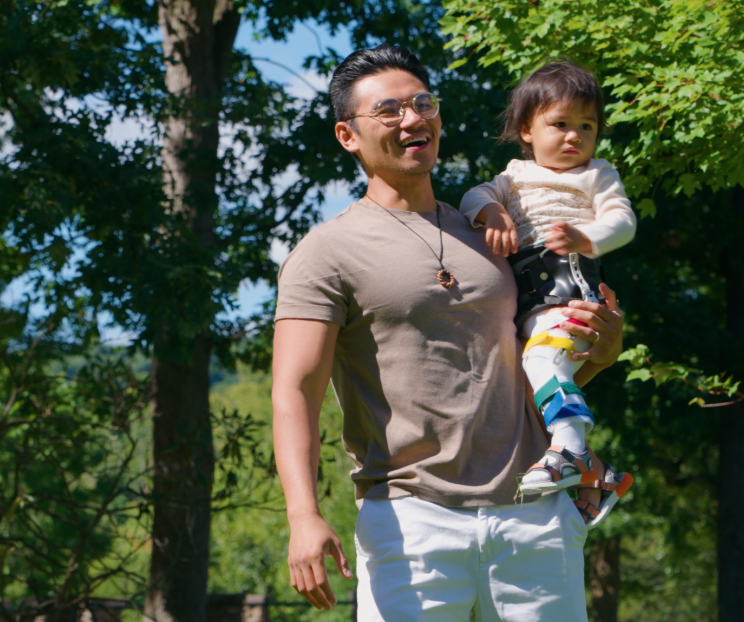
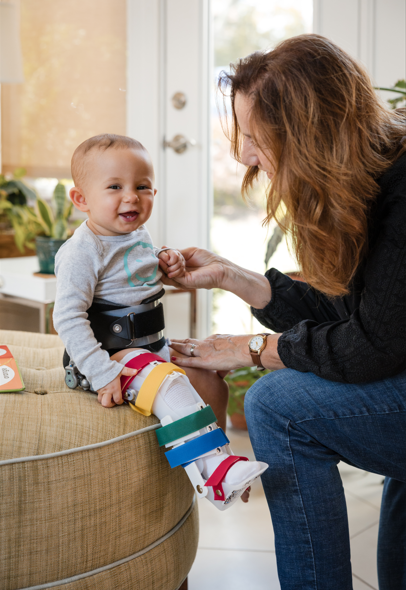
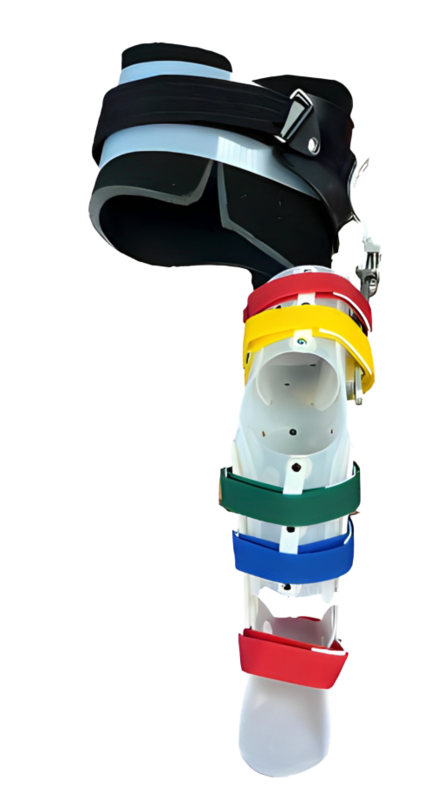
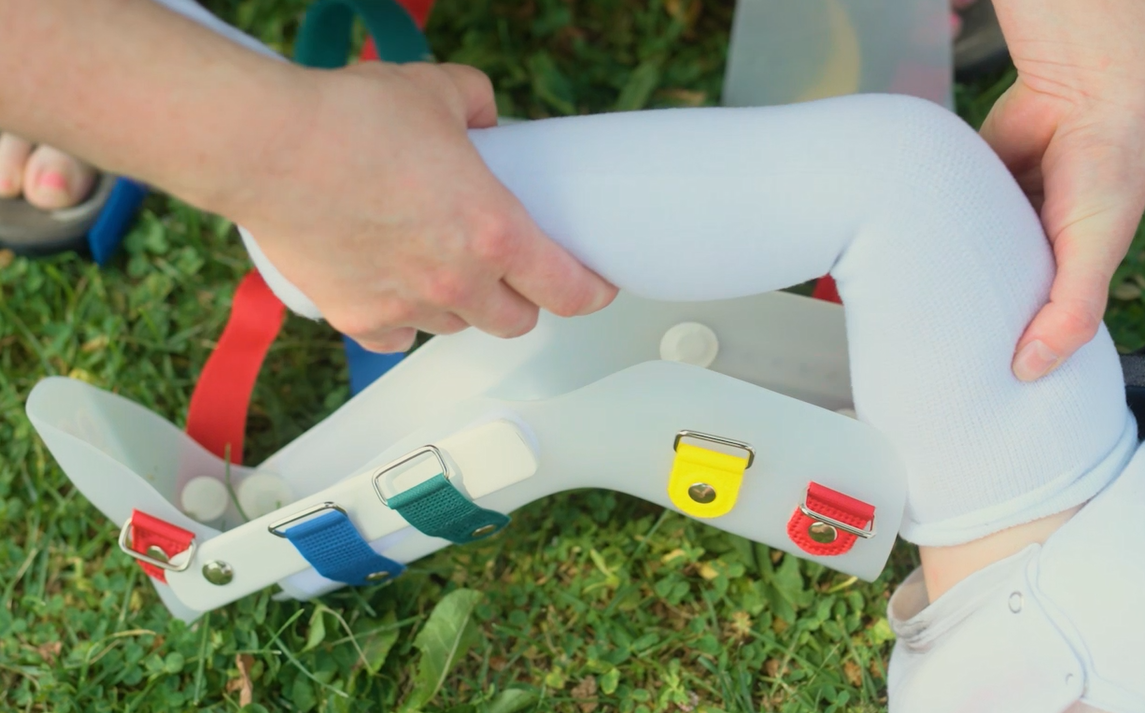
  • What it is: A removable or semi-removable device that wraps around the leg and hip to hold the femur steady.
  • Who it’s for: Often used in older children whose bones are still growing but who may not need the strict immobilization of a spica cast. However bracing has been used in children under 12 months of age in some cases with success as well.
  • Advantages:
    • Lighter and less restrictive than a spica cast.
    • Easier for hygiene and daily care.
    • Allows for some movement, which can make recovery more comfortable.
    • It is adjustable to keep constant compression around the fracture.
    • Does not need to be put on in surgery.
  • Challenges:
    • Requires the child (and family) to be reliable about keeping the brace on.
    • Not always suitable for very young or highly displaced fractures.

Learn More About Femur Fracture Bracing In Our Blog:

Using a Brace for Femur Fracture Treatment Types and Tips

Doctors decide based on:

  • The child’s age and size.
  • The location and severity of the fracture.
  • How well the bone can be kept aligned.

Parent takeaway: Both spica casting and bracing are effective for healing a child’s femur fracture. Your doctor will recommend the option that provides the best stability and comfort for your child’s specific situation.

Learn More About Femur Fracture Treatment Options In Our Blog:

Pediatric Broken Femur Treatment Options

femur fracture

DF2® Brace Care Tips for Parents

  • Look around the brace straps each day for redness, blisters, or skin irritation.
  • Use the provided fracture sock to protect the skin and keep it clean.
  • Change fracture sock as needed, especially if soiled. Ask your medical provider if you need believe the sock needs to be changed.
  • Wipe the brace with a damp cloth as needed.
  • Make sure the fracture sock is changed and washed regularly to prevent odors and skin breakdown.
  • Brace and sock must be completed dry before placing it back on your child.
  • Straps should be snug but not too tight — you should be able to slip one finger underneath.
  • If a strap loosens or the hinge seems out of position, adjust gently or call your care team for guidance.
  • One advantage of the DF2® brace is that it allows access for diapering, toileting, and clothing changes.
  • Use adaptive clothing or stretchy pants to make dressing easier.
  • The brace allows your child to sit, lie down, and reposition more easily than a cast.
  • Support your child with pillows to prevent pressure spots and to keep them comfortable.
  • Do not let your child bear weight on the injured leg until cleared by the doctor.
  • Encourage safe play activities that don’t risk falls or impact to the leg.
  • The brace can be adjusted as your child heals, so follow-up visits are important to check alignment and healing progress.

Learn More About Bracing Femur Fractures In Our Blog:

Compression for Child Fracture Healing: How Bracing Helps

Top Things To Do When Your Child Has a Femur Fracture

  • Whether your child is in a spica cast, brace, or had surgery, stick to the care instructions given by the doctor and orthopedist.
  • Attend all follow-up appointments so the bone can be checked as it heals.
  • Give pain medicine as prescribed, especially in the first few days.
  • Use pillows or cushions to help your child sit or sleep more comfortably.
  • For spica casts: use waterproof pads, double diapers, or special equipment to prevent messes and skin irritation.
  • For braces: check the skin daily, make sure straps are snug (but not too tight), and clean the skin as needed.
  • Call the doctor if you notice swelling, blue/pale toes, bad odor, fever, or if your child seems in extreme pain.
  • Report any slipping, cracking, or damage to the cast or brace.
  • Be prepared for changes in mobility—your child may need a wheelchair, special car seat, or help with toileting.
  • Plan safe play and entertainment activities that keep them engaged without putting weight on the leg.
  • Make sure your child eats a healthy diet with plenty of protein, calcium, and vitamin D to help the bone heal.
  • Follow instructions about when your child can start putting weight on the leg again.
  • Once the cast or brace is removed, your child may need physical therapy to regain strength and flexibility.
  • Encourage gentle activity as cleared by the doctor—it helps your child recover faster.

Parent Story

Cora’s Parent Story

In this heartfelt video, Cora shares her personal journey as a mother navigating the challenges of her daughter’s femur fracture. From the initial shock of the injury to the overwhelming decision of how to best support her child’s recovery, Cora discusses why the DF2 brace became the ideal solution over traditional spica casts. Join us as we explore the emotional and practical aspects of this journey, offering insights and support for other parents facing similar situations.

Femur Fracture Resources

Search By keyword

Alfie’s Story- How the DF2® Brace helped keep the magic of a family’s Disney vacation alive

Pediatric Broken Femur Treatment Options

Using a Brace for Femur Fracture Treatment

Product Resources

Search By keyword

Filter by Product

Filter by Product

Femur Fracture

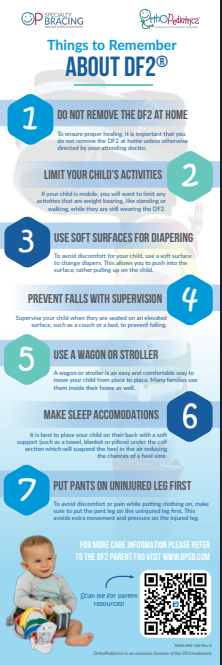
Things to Remember About DF2®

Femur Fracture

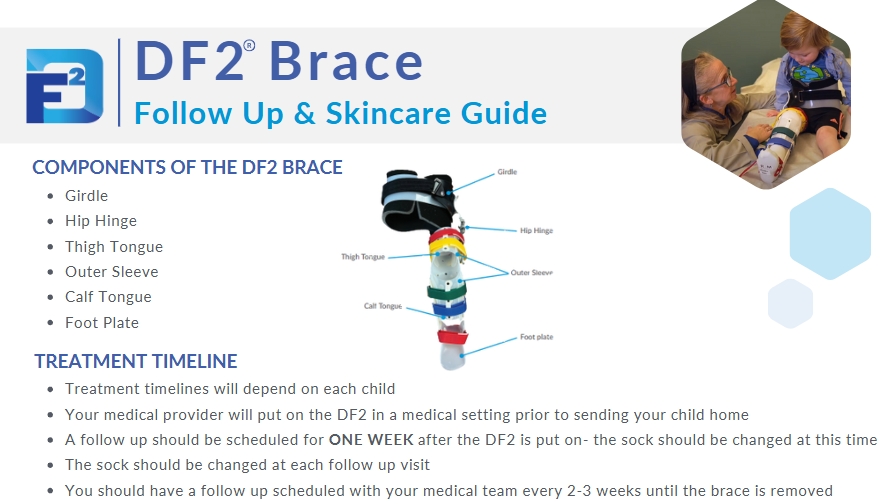
DF2® Follow Up & Skincare Guide

Femur Fracture

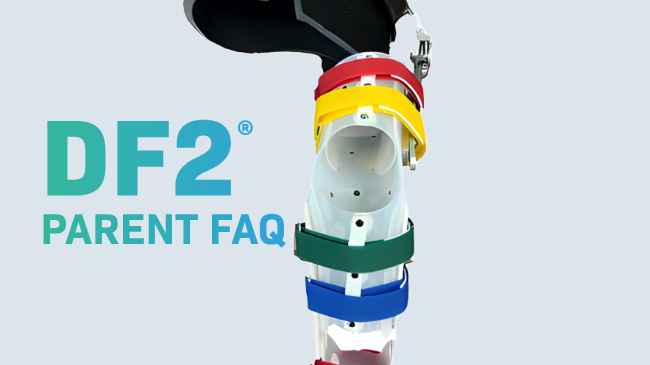
DF2® Parent FAQ (English)