scoliosis treatment
scoliosis bracing

What is Scoliosis?

Scoliosis is a condition where a child’s spine curves to the side in an “S” or “C” shape instead of being straight. This curve can be mild and hardly noticeable, or more significant and cause changes in posture, uneven shoulders, or a rib hump. While scoliosis can occur at any age, it most often is diagnosed in growing children and teenagers.

Scoliosis can develop for different reasons, and doctors usually group it into these main types:

  • Idiopathic Scoliosis
    • The most common type (especially in adolescents).
    • “Idiopathic” means the exact cause is unknown.
    • Often noticed during growth spurts, especially in pre-teens and teenagers.
  • Congenital Scoliosis
    • Present at birth.
    • Caused by abnormal development of the bones in the spine before birth.
  • Neuromuscular Scoliosis
    • Caused by conditions that affect the nerves and muscles, such as cerebral palsy, spina bifida, or spinal muscular dystrophy.
    • The muscles can’t support the spine properly, leading to a curve.
  • Uneven shoulders or hips
  • One shoulder blade sticking out more than the other
  • The body leaning to one side
  • Ribs appearing more prominent on one side when bending forward
  • An arm gap larger on one side of the body than the other

To confirm scoliosis, a doctor may:

  • Perform a physical exam, including the “forward bend test” to note the rotation of the curve.
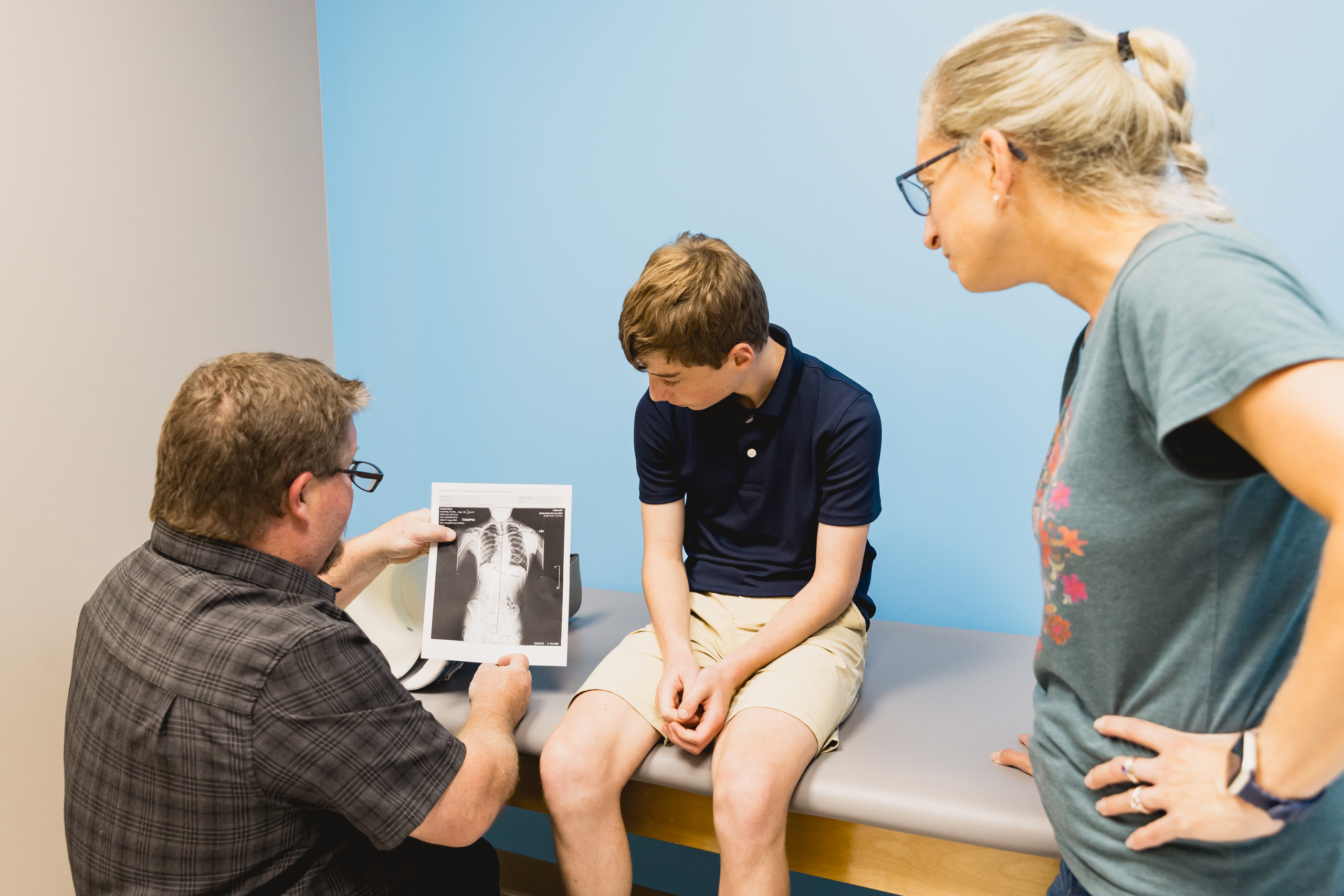
  • Order X-rays, which show the exact size and location of the curve.
  • Sometimes request other imaging, like an MRI, if there may be underlying causes.
  • The size of the curve is measured in degrees (called the Cobb angle), which helps guide treatment decisions.

Learn more on our blog:

How is Scoliosis Diagnosed: A Patient and Parent Guide 

scoliosis bracing

Treatment for Scoliosis

Treatment for scoliosis depends on the age of the child, the size of the curve, and whether the curve has progressed over time. Not every child with scoliosis needs treatment — sometimes careful watching is enough. Here are the main approaches:

If the curve is small and the child is still growing, doctors may recommend regular check-ups and X-rays every few months.

  • If the curve is moderate (around 25–40 degrees) and the child is still growing, a brace may be recommended.
  • The goal of the brace is to prevent the curve from progressing, so to stop the curve from getting worse.
  • Bracing is most effective when worn as directed.
  • Modern braces are lighter, have a lower profile, and can usually be worn under clothing.
  • Special scoliosis-focused exercises (sometimes called Scoliosis Specific Exercises) can help improve posture, strengthen muscles, and support the spine.
  • Positive results can be achieved when combining bracing with scoliosis specific exercises.
  • Typically used in severe or complex scoliosis curves to help slowly stretch and lengthen the spine before surgery.
  • The goal is to make spine surgery safer and more effective by reducing and improving flexibility in the spine prior to surgery.

Learn more from our blogs:

Common Halo Gravity Traction Terminology Explained for Families

Halo Gravity Traction Explained: A Parent’s Guide

Learn More about TRAXIO by watching this video:

Getting to Know the TRAXIO Frame for Halo Gravity Traction

  • Recommended for more severe curves that continue to progress despite bracing.
  • Advances in surgery mean that recovery and outcomes are much better today than in the past.

Learn More on Our Blog:

Scoliosis Surgery Benefits, Risks, & What Families Need to Know

Learn more about our Surgical Resources
scoliosis bracing

Bracing Styles

If your child needs a brace to treat their scoliosis, you’ll hear about different brace styles. Braces are custom-made to fit your child’s body and are designed to keep the spine from curving more as your child grows. Here are the main types of braces:

  • The most common type of scoliosis brace.
  • Worn under the arms, around the rib cage, lower back, and hips.
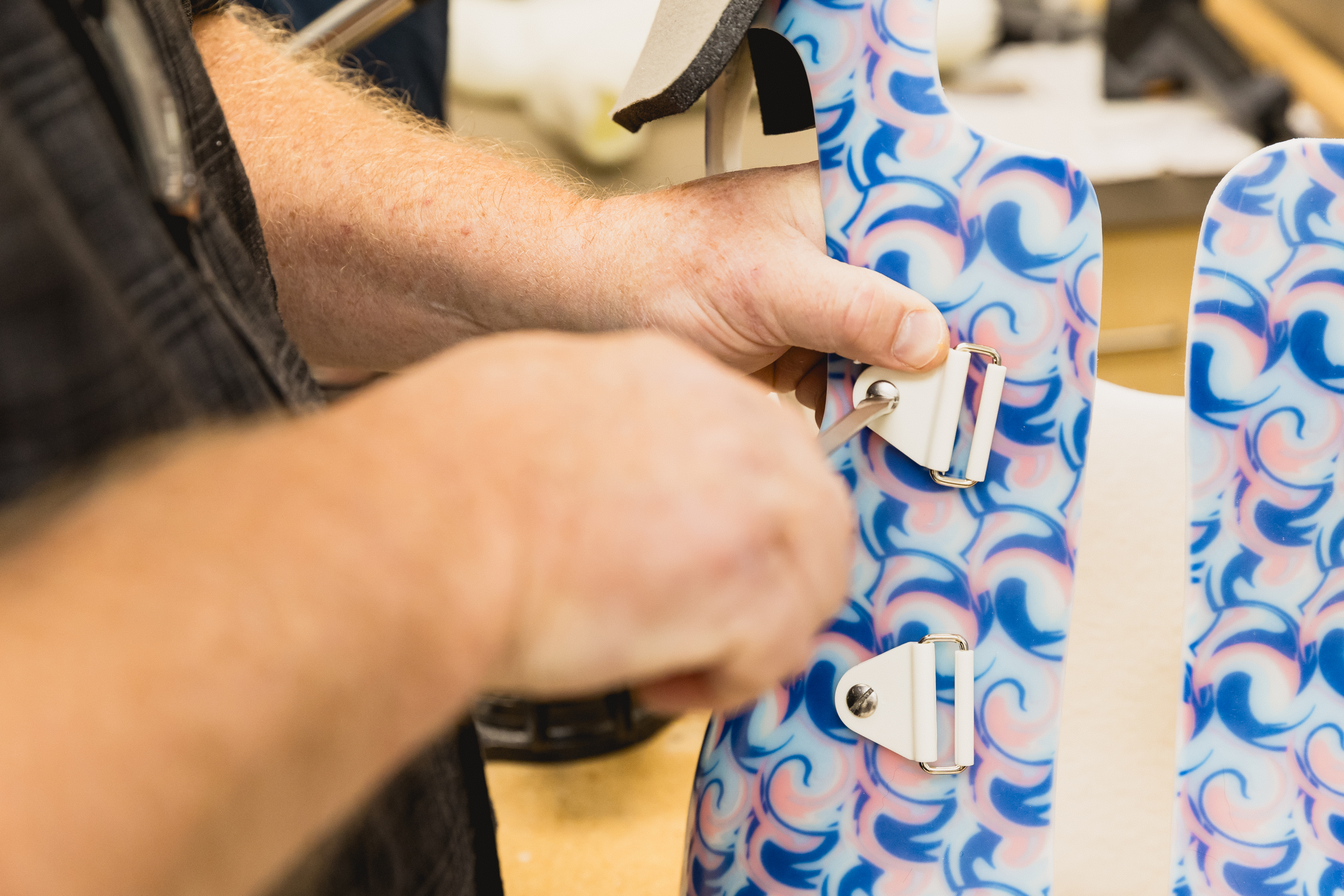
  • Usually made of lightweight plastic and custom-fitted.
  • Can be worn under clothing.
  • Examples: Boston Brace 3D, Boston RC, Boston Baby, Boston Soft Spinal, Wilmington Brace, Rigo Cheneau

Learn More About Different Bracing Styles on Our Blogs:

Understanding the Benefits of Scoliosis Braces for Kids & Teens

A Parent’s Guide to Scoliosis Braces for Kids & Teens

  • Worn while laying down and sleeping.
  • Designed to apply stronger, targeted pressure since the brace doesn’t need to be tolerated during the day.
  • Work best for certain curve types.
  • Examples: Night Shift Brace, Providence Brace, Charleston Bending Brace.
scoliosis bracing

Wearing a scoliosis brace may feel challenging at times, but it plays a crucial role in ensuring the best possible outcome for your child’s scoliosis treatment. Wearing the brace as prescribed is the single most important thing for your child on their scoliosis treatment journey.

  • Stops the curve from progressing– Braces prevent the curve from increasing during growth.
  • Helps avoid surgery– Consistent brace wear greatly lowers the chances that your child will need spinal surgery.
  • Works during growth– Braces are most effective while your child is still growing, making wear time especially important during these years.
  • Every hour counts– Studies show that the closer the brace is worn to the prescribed hours the better the results.
  • Protects long-term health– Preventing curve progression supports healthy body function, posture, and comfort into adulthood.
  • Supports confidence and independence– Following the treatment plan and prescribed wear time helps your child feel in control of their scoliosis journey

Learn More About the Importance of Bracing in Our Blogs:

Self-care Tips for Kids & Teens with Scoliosis Bracing

Tips for Adjusting to a Scoliosis Brace

  • If you are looking for support from families also on the Scoliosis Bracing Journey- Join our Support Group

Click Here to Join

For additional support and information check out these resouces:

Top Tips for Families After a Child’s Scoliosis Diagnosis

Take time to understand what scoliosis is, what type your child has, and the size of their curve. Reliable knowledge reduces anxiety.

Bring a notebook or use your phone to jot down questions ahead of time. Write down the answers so you can review them later.

Even mild scoliosis needs monitoring. Keep all appointments so changes can be caught early.

Give space for them to share how they feel — physically and emotionally. Validation and encouragement go a long way.

Whether observation, bracing, or therapy, include your child in discussions so they feel part of the decision-making.

These specialists are key to successful brace wear and exercises. Don’t hesitate to call them if something feels off.

Communicate with teachers and the school nurse so your child gets needed understanding, breaks, or privacy when changing clothes.

Online groups, local scoliosis networks, and youth programs help kids feel less alone and give parents encouragement too.

Unless told otherwise by the doctor, encourage your child to keep moving, play sports, and do activities they love. This supports both health and confidence.

Treatment is a journey. Celebrate milestones — brace hours met, smooth check-ups, or simply adapting to a new routine.

Patient story image showing young girl wearing scoliosis brace

Patient Story

“Just With a Brace”: Isabelle’s Scoliosis Journey

When Isabelle first learned she needed to wear a brace for scoliosis she felt a mix of sadness, confusion, and a fear of the unknown. In her patient experience, she shares how she adjusted to wearing her brace, while still thriving at school, running track, and living her life. A powerful reminder that your brace doesn’t define who you are.

Scoliosis Resources

Search By keyword

A Patient & Parent Guide: How Scoliosis Is Diagnosed

A Parent’s Guide to Scoliosis Braces for Kids and Teens

Understanding the Benefits of Scoliosis Braces for Kids and Teens

Product Resources

Search By keyword

Filter by Product

Filter by Product

Scoliosis

Scoliosis Treatment Guide

Scoliosis

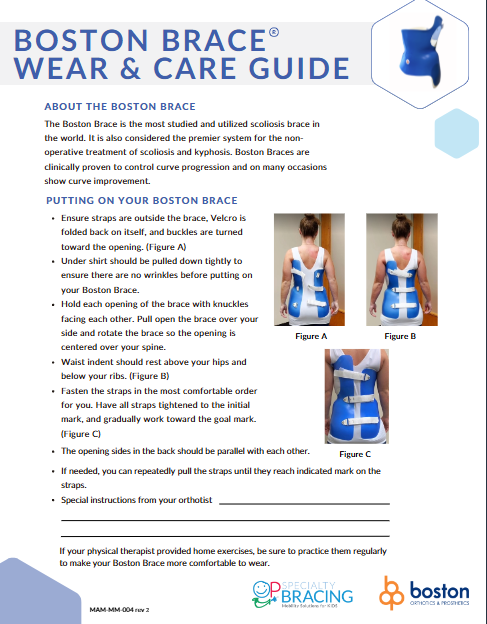
Boston Brace Wear & Care Guide

Scoliosis

Overview of Scanning for Your Scoliosis Brace