
Debbie’s Prosthetic Journey: A Spina Bifida Success Story With OPSB
Every family’s path is different, especially when a child is born with medical challenges. But some stories stand out for the love, teamwork, and hope at their core. Debbie’s journey with spina bifida, her transformation after a major surgery, and her family’s experience with pediatric prosthetic experts at OPSB combine to offer guidance and hope for other families on a similar path.
Debbie’s Early Challenges with Spina Bifida
Debbie’s story began with her arrival into the world, bringing with it both joy and sudden, unexpected challenges. Debbie was born with spina bifida meningocele, a form of spina bifida where the spinal cord lining pushes out but is covered by skin. For her family, the first look at her legs was hard. She had a severe contracture in one leg—her foot bent up tight, pressing against her bottom at a 90-degree angle.
Her mom determined to give Debbie every chance, started the long process of . For two years, doctors and therapists tried to stretch and reshape her leg using a series of casts and braces. They saw some progress, with the angle improving to about 45 degrees, but time and time again, the tightness returned. Each time the casts came off, her leg would curl back.
This time was tough for both Debbie and her mom. Watching your child struggle, especially when therapy, orthopedic treatments, and bracing brings only a little relief, brings its own kind of heartache. Still, her family pushed on, always hoping for a breakthrough.
A Life-Changing Decision
After two years, Debbie’s mom stood at a crossroad. Would another year bring more progress, or would they need to try something new? Together with her doctors and the OPSB team, they made the hard decision: at age two, Debbie would have a knee disarticulation surgery. This meant removing her leg at the knee joint, but without cutting the bone. The hope was that, with a prosthetic limb, Debbie could finally find freedom and movement.
Decisions like these aren’t easy. The thought of amputation is frightening for any parent. But Debbie, and her family leaned into her trusted relationship with the OPSB team to answer questions about questions about life with a prosthesis, so they felt prepared, educated, and ready for this big change.
Life After Knee Disarticulation and Prosthetic Use
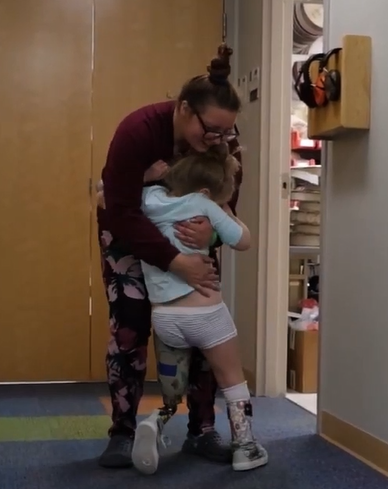
The impact of this decision was clear as Debbie recovered and began using her prosthesis. Shortly after surgery, her life looked very different. No longer held back by her contractures, Debbie accomplished something that once seemed out of reach: she took her first independent steps.
Seeing Debbie walk on her own for the first time was a turning point for her family. Her mom remembers the thrill clearly, saying, “That first day she took those steps, it was just amazing. So I knew I made the right choice at that point.”
Today, Debbie is a joyful child who plays, explores, and rarely slows down. With her new leg, she fits right in with her friends. She doesn’t let her prosthesis hold her back and rarely even thinks about it.
Trusted Support: The Role of the Pediatric Certified Prosthetist Orthotist
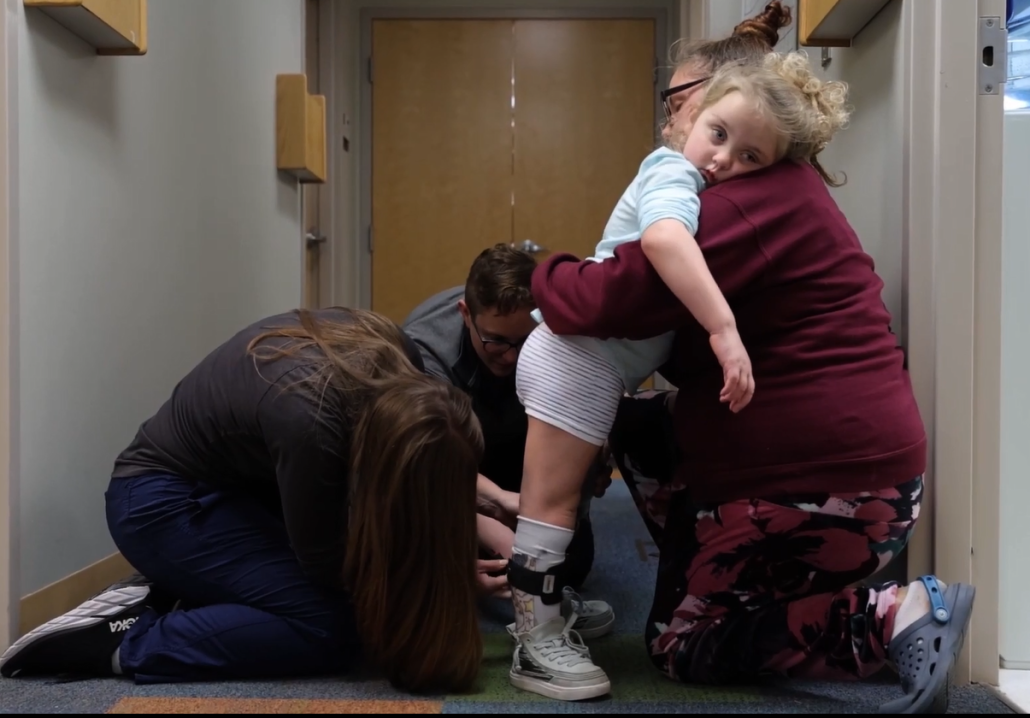
From the very start, Debbie and her family worked closely with Lauren, a pediatric Certified Prosthetist Orthotist (CPO) at OP Specialty Bracing. Lauren first met Debbie when she needed an Ankle Foot Orthosis (AFO) as an infant, and a KAFO (knee ankle foot orthosis) for her contractures. Over the years, Lauren became more than just a healthcare provider. She listened, offered ideas, and became a partner in Debbie’s progress.
Debbie’s mom shares, “We click, we just click. I don’t know how else to explain it. I feel comfortable and I feel like I can express my concerns… She really listens and goes above and beyond.” This trust made a difference every step of the way, especially when it came time to make life-changing decisions.
Today, clinic visits are a highlight for Debbie—the team has turned what could be a stressful experience into something positive. “She’s not scared to go. She loves coming here; it’s like a fun day trip for her,” her mom says.
The Collaborative Care Team and Support System
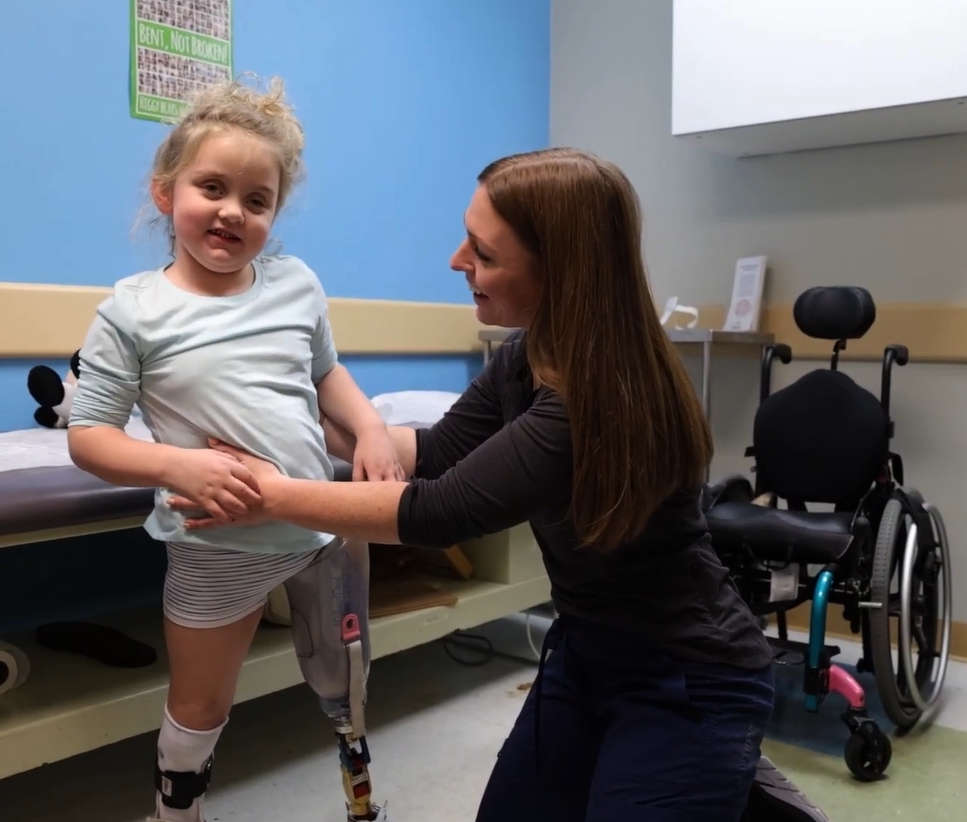
What makes Debbie’s story even stronger is the collaborative environment at OPSB and their connections with CHOP (Children’s Hospital of Philadelphia). Care at this clinic means more than just fitting a device It involves teamwork among doctors, therapists, prosthetists, orthopedic surgeons, rehab specialists, and, importantly, parents.
Having this network made a real difference. When Debbie’s family faced the decision about amputation, they could ask questions and talk with everyone involved. Krista, Debbi’s mom, was a key team member in advocating for her daughter. She worked closely with the CHOP and OPSB specialists to gather input from every corner, ensuring no voice was left out.
How Communication Builds Better Care
Open and regular communication made all the difference. Debbie’s mom could share daily observations about what was working and what wasn’t. This allowed the care team to brainstorm solutions and fine-tune Debbie’s braces and prostheses.
Key communication points included:
- Families sharing daily challenges and successes
- Team members brainstorming possible solutions
- Coordination among doctors, therapists, and prosthetists
- Making sure parents steer decisions about their child’s care
Lauren emphasizes, “Parents know best.” Healthcare providers don’t make decisions for families. Instead, they give all the details, options, and support—so the family can choose what’s right for their child.
Debbie’s mom says this teamwork made her feel safe and confident. She never felt alone or unheard. “It’s like she knows what I’m thinking, with the braces and prostheses, she goes above and beyond… I know we’re in the right spot for her. I feel it in my gut.”
Advice and Insights for Other Parents
Walking this path means facing tough choices. Debbie’s story is a reminder for other parents to stay informed, ask questions, and trust their instincts.
Here’s some practical advice for any parent navigating medical decisions for their child:
- Ask many questions. Don’t hesitate to seek details about your child’s diagnosis and all possible treatments.
- Request clear explanations. Don’t settle for jargon—ask until you understand.
- Expect real listening. Your concerns and ideas should be welcomed by the care team.
- Gather input from everyone. Don’t just rely on one opinion—pull together insights from all the specialists involved.
The biggest message is to trust your gut and keep searching until you feel comfortable. Debbie’s mom stresses the value of finding a provider who feels like family: “She goes above and beyond… It’s just amazing and I’m so thankful that, first shot, we got you… I know we’re in the right spot for her.”
Choosing a prosthetist who listens and adapts makes the experience better for everyone. You should feel safe expressing anything on your mind.
The collective effort at OPSB doesn’t just support the child’s physical progress, but also builds confidence and relief for parents.
Final Thoughts on Debbie’s Journey and Words of Encouragement
Debbie’s family faced big hurdles: a diagnosis that shaped her first years, a contracture that restricted her movement, years of therapy, and then the big decision to try amputation. But with each challenge, they found a turning point—thanks in large part to teamwork among specialists, their own resolve, and the caring professionals at OPSB.
Today, Debbie is walking, running, and enjoying life as she should. Her independence and happiness are proof that, even when choices seem overwhelming, there’s hope for a better tomorrow.
For families just beginning their own journey, be encouraged: you are your child’s best advocate. The right team will listen, share ideas openly, and stand alongside you. Choose experts who treat you as partners—not just patients.
If you’re looking for knowledgeable, compassionate care, consider reaching out to OPSB clinics for resources and support tailored for families facing similar challenges. Your child’s story can have a happy chapter, just like Debbie’s.
Disclaimer:
OPSB products and products distributed by OrthoPediatrics Corp. should be used under the guidance of qualified healthcare professional. Individual results may vary. Please consult your pediatrician or orthopedic specialist for professional advice, including intended use, warnings, precautions, side effects and contraindications. This video is for informational purposes only and does not constitute medical advice. Always follow your doctor’s recommendations and instructions.

