
What Happens With My Child’s Lower Limb Orthotics As They Grow?
Your child grows out of shoes, pants, and jackets in what feels like a blink. So it is natural to worry and wonder, what happens with their lower limb orthotics as they grow?
If your child wears braces or supports on their feet, ankles, knees, or legs, you are not alone. Many families walk this road. Orthotics can look medical or even a bit scary at first, but at their core they are just tools that help your child move, play, and stay safe.
Kids grow fast. Their bones lengthen, muscles stretch, and walking patterns change over time. Because of this, orthotics will need updates, adjustments, and sometimes complete replacements. This is normal, expected, and part of good care, not a sign that something has gone wrong.
This guide explains what to expect as your child grows with lower limb orthotics, how often to check fit, what happens at follow up visits, and how to work with your orthotist and care team. The goal is simple: keep your child comfortable, active, and confident while their body grows and changes.
Understanding Lower Limb Orthotics For Growing Children
Before thinking about growth, it helps to know what orthotics do and why your child might need them.
What are lower limb orthotics and why might my child need them?
Lower limb orthotics are devices that support the legs from the hips down. They can be small, like an in-shoe insert, or larger, like a brace that goes up to the knee.
Common types include:
- Foot orthotics or inserts: These sit inside the shoe to support the arch or heel.
- AFOs (ankle foot orthoses): Braces that support the ankle and foot, often made of plastic.
- Knee braces or KAFOs (knee ankle foot orthoses): Braces that support the knee as well as the lower leg and foot.
These devices can help your child by:
- Supporting weak muscles
- Holding joints in a better position
- Improving balance and walking pattern
- Reducing pain or fatigue
- Protecting joints after injury or surgery
Children may use lower limb orthotics for many reasons, such as:
- Flat feet that cause pain or tired legs
- Cerebral palsy
- Spina bifida
- Toe walking
- Knock knees or bow legs
- Recovery after fracture or surgery
- Neuromuscular conditions that affect strength or coordination
The main purpose is not only to “fix” something. Orthotics help your child move better, join in with friends, and stay active at home, at school, and in sports.
How growth affects a child’s bones, muscles, and joints
Children grow in quick bursts. Their bones lengthen, their muscles and tendons stretch to keep up, and their balance and movement change.
Growth does not happen at the same speed all the time. For example:
- Toddler years (1 to 3 years): Lots of change in balance and walking, feet and legs grow fast.
- Early school years (4 to 8 years): Steady growth; strength and coordination improve.
- Preteen and early teen years (9 to 14 years): Big growth spurts; legs may feel “too long” at times, coordination can change.
During a growth spurt, your child might shoot up a few inches in a short time. Orthotics that fit well last month can suddenly feel tight, rub the skin, or sit in the wrong place.
This is not a sign that anyone did something wrong. It is simply what happens when a growing body and a solid device meet.
Why orthotics need to change as your child grows
Orthotics are made to hold part of the leg in a specific position. They support the bones and joints at certain angles so muscles can work better and walking is safer.
As your child grows:
- Bones get longer, so straps and shells may not line up with the same spots.
- The shape of the leg or foot can change.
- The angle of joints can shift, which changes how the brace interacts with the limb.
At some point, the old orthotic will not match the new leg shape or length. It might still fit “on,” but it might not be doing its job or might cause pressure areas.
Outgrowing an orthotic is expected. It does not mean the device failed or your child “got worse.” It just means it is time to adjust the plan.
Sometimes the orthotist can tweak the current brace. Sometimes a brand new device is the better choice. As your child grows and develops, they may even move to a different type of orthotic that allows more movement or looks slimmer.
What To Expect As Your Child Grows With Lower Limb Orthotics
Knowing the likely timeline and what follow up visits involve can ease a lot of worry.
How often will my child’s orthotics need to be checked or replaced?
There is no single schedule that fits every child, but some general patterns help as a starting point.
- Many children need new orthotics every 9 to 18 months.
- During growth spurts, this might shorten to every 6 to 12 months.
- Younger children often outgrow devices faster than teens. A toddler can sometimes jump two shoe sizes in a year.
These are just averages. Your child’s orthotist and medical team will give guidance based on:
- Age and growth rate
- Diagnosis and movement goals
- How hard they are on their devices (sports, playground, etc.)
Regular checkups, often every 6 to 12 months, help catch problems early. If you notice sudden changes, you do not need to wait for the next planned visit. Call the clinic and ask for an earlier review.
Signs your child has outgrown their lower limb orthotics
Your child’s behavior and comfort often tell you what you need to know.
Some clear signs include:
- Red marks that do not fade within 20 to 30 minutes after taking the orthotic off
- Blisters, broken skin, or calluses
- New pain, pressure, or rubbing where there was no problem before
- Toes or heel hanging off the edge of the device
- Straps that no longer reach or have to be pulled extremely tight
- You struggle to get the brace on, or it only fits without socks
- A change in walking, such as limping, more tripping, or shorter steps
- Your child suddenly refuses to wear the orthotic after previously accepting it
- Pants, leggings, or shoes that used to fit over the brace suddenly feel tight
Trust your instincts. If something looks wrong, feels wrong, or your child starts avoiding activity, reach out to your orthotist. Do not force your child to “push through” real pain from a poor fit.
What happens at an orthotic review or follow up visit?
A follow up visit is a chance to check how the device and your child are working together.
A typical appointment might include:
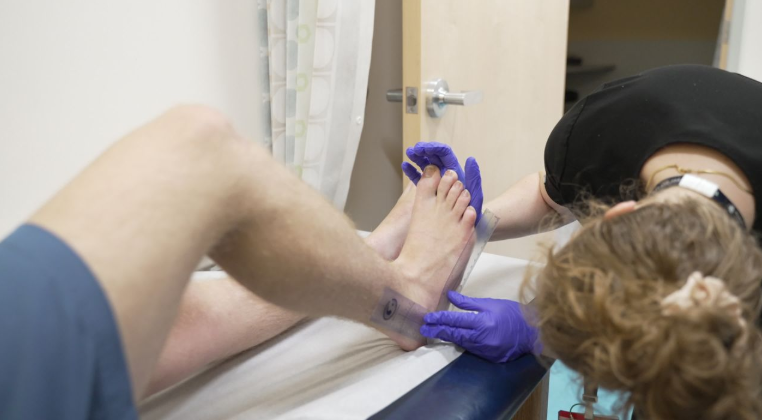
- Measurements of your child’s foot and leg length and width
- Skin check for red spots, rubbing, or pressure areas
- Watching your child walk with and without the orthotic
- Questions about comfort, school, sports, and daily life
- Checking how shoes fit with the device
The orthotist may then:
- Tighten or loosen parts
- Add or move padding
- Trim plastic edges or grind rough spots
- Adjust angles or hinges
- Suggest a new device if needed
Parents are an important part of the visit. Ask questions, share your observations, and speak up if something does not make sense. The goal is not just a perfectly shaped brace, but a device that helps your child reach their goals.
Can a child ever grow out of needing lower limb orthotics?
Some children use orthotics for a limited time. For example:
- To support healing after surgery or a fracture
- To guide growth in a certain direction
- To help with certain foot shapes that improve with age and strength
These children may eventually stop using orthotics. Their bodies grow, their muscles get stronger, and their walking becomes steady without extra support.
Other children have long term or lifelong conditions. They may always benefit from some level of support. The type of device might change over time, from a larger brace to a smaller one, or from a rigid style to something more flexible.
Growth, therapy, and practice can lead to big changes in strength and movement. The key is not to focus only on “when can we stop orthotics” but to ask:
- Is my child comfortable?
- Can they join in daily life and play?
- Does the device help them do more, not less?
Function, comfort, and participation are what matter most.
How Orthotics Are Adjusted Or Changed As Your Child Grows
Orthotics rarely stay exactly the same for years. Small and large changes keep them working well as your child grows.
Small adjustments that help orthotics keep up with growth
Sometimes the size of the brace is still fine, but the shape or pressure points need tweaking. In this case, the orthotist can often extend the life of the device with minor changes, such as:
- Adding, removing, or shifting padding to relieve pressure
- Adjusting straps or closures so they fit more securely
- Bending metal parts if the design includes metal sections
- Trimming plastic edges that dig into skin or catch on clothing
- Adjusting the angle of joints or hinges to improve movement
These small fixes can make a big difference in comfort. They also help keep alignment correct as your child grows and their posture shifts. Regular reviews help catch these needs before they turn into bigger problems.
When is it time for brand new orthotics?
There comes a point when another small adjustment is not enough. A new orthotic is usually needed when:
- Your child has grown several shoe sizes since the last device
- The brace is clearly too short, too narrow, or does not sit in the right place
- The plastic is cracked, very worn, or no longer holds its shape
- Your child’s diagnosis or walking pattern has changed
- The current design no longer fits their daily life at school, home, or in sports
Insurance or funding programs may set certain time frames for new devices. Sometimes coverage is tied to “wear and tear” or growth. Keep reports, letters, and photos organized so you can share them as needed. If you are unsure about coverage, ask the clinic to help you review options.
Changing orthotic type as your child gets stronger and more active
Growth is not just about height. It is also about skill, strength, and confidence. Many children move to different types of orthotics over time.
For example:
- A child might start with a solid AFO that holds the ankle still, then move to a hinged AFO that allows more movement as strength improves.
- Another child might start with an above ankle brace, then later only need in-shoe inserts.
- A teen who becomes very active in sports might switch from a bulkier brace to a slim design that still supports but fits better in athletic shoes.
These changes are usually a sign of progress and careful planning, not a setback. The care team watches how your child moves, listens to your goals, and chooses the type of support that matches their current needs.
Working with your orthotist, therapist, and doctor as a team
You are not supposed to figure all of this out alone. A strong care team makes a big difference.
Your child’s team might include:
- An orthotist who designs and fits the device
- A physical therapist who works on strength, stretching, and movement skills
- A doctor or specialist who manages the medical side
Helpful information you can share:
- Any new falls, trips, or changes in walking
- Complaints of pain or fatigue, especially after school or sports
- Frustration with putting the brace on or taking it off
- Changes in school or activities, like starting a new sport
Some parents keep a simple note on their phone or take photos of skin marks or worn shoe areas. These details help the team make better decisions.
You know your child best. Your voice matters.
Practical Tips For Parents Managing Orthotics Through Growth
Daily life with orthotics involves small routines and choices that can make things smoother for everyone.
Keeping your child comfortable as they grow
Comfort starts with the basics and builds from there.
- Check the skin daily, especially when a device is new or recently adjusted. Look at bony areas, straps, and edges.
- Use smooth, well fitting socks without thick seams. Knee high socks often work best with AFOs.
- Make sure shoes have enough length and depth for both the foot and the orthotic. Many parents like shoes with removable insoles and wide openings.
- When you get a new device, break it in slowly. Start with 1 to 2 hours of wear, then increase time each day as long as skin checks are clear and your child feels ok.
- Plan for growth by choosing shoes that have a bit of extra room for both the orthotic and the foot, without being sloppy.
If your child says something hurts, listen. Some mild rubbing may be expected at first, but sharp pain, strong pressure, or skin damage is a reason to stop and call the orthotist.
Planning ahead for costs, school, and activities
Growth and orthotics can affect your budget, your calendar, and your child’s routine.
Helpful ideas:
- Try to plan for new orthotics in your yearly budget if you can. Ask your clinic what a typical replacement cycle looks like for your child’s age.
- Check insurance coverage and ask about prior authorizations, payment plans, or community programs that help with cost.
- Talk with your child’s school. Let teachers and staff know about orthotics, especially for PE, field trips, stairs, and extra time for changing shoes.
- Many children with orthotics can still play sports and join hobbies. They may need small changes, such as different shoes, extra stretching, or short rest breaks.
- When possible, schedule follow ups during school breaks or on days with fewer important activities to reduce stress.
The goal is not to limit your child, but to make their routine workable and predictable.
Supporting your child’s confidence while wearing orthotics
Body image and confidence matter, especially as kids get older.
You can help by:
- Giving your child simple words to explain their orthotics, like “These braces help my muscles” or “They help me walk and run better.”
- Letting them choose sock colors, brace patterns, or shoe styles when possible. A bit of personal style can go a long way.
- Celebrating what their body can do. Cheer for milestones like walking longer distances, climbing stairs, riding a bike, or joining a game at recess.
- Being honest that it is ok to feel annoyed or different sometimes. Growth stages with new devices can be tiring.
Remind your child that orthotics are tools, not labels. They are part of how they move through the world, not the whole story of who they are.
Conclusion
Children grow, and their lower limb orthotics grow and change with them. New sizes, fresh adjustments, and even different types of devices are all part of the normal process of supporting a growing body.
Regular checkups and careful skin and comfort checks at home help you spot problems early. When something feels off, reaching out to your orthotist or care team is the right move, not a bother. Outgrowing a brace is a sign that your child is growing, not that anyone failed.
As your child becomes stronger and more active, the kind of support they need may change. Through it all, your partnership with the orthotist, therapist, and doctor keeps the focus on what matters most: your child’s comfort, confidence, and ability to join in everyday life.
If you have noticed new red marks, a change in walking, or your child avoiding their brace, consider scheduling a review. You do not have to figure this out on your own, and asking for help is a smart step toward keeping your child safe, active, and ready for whatever comes next.
Disclaimer:
OPSB products should be used under the guidance of a qualified healthcare professional. Individual results may vary. Please consult your pediatrician or orthopedic specialist for professional advice. This article is for informational purposes only and does not constitute medical advice. Always follow your doctor’s recommendations and instructions.
MAM-MM-141

