
Georgia’s Story: A Little Helmet, A Lot of Heart
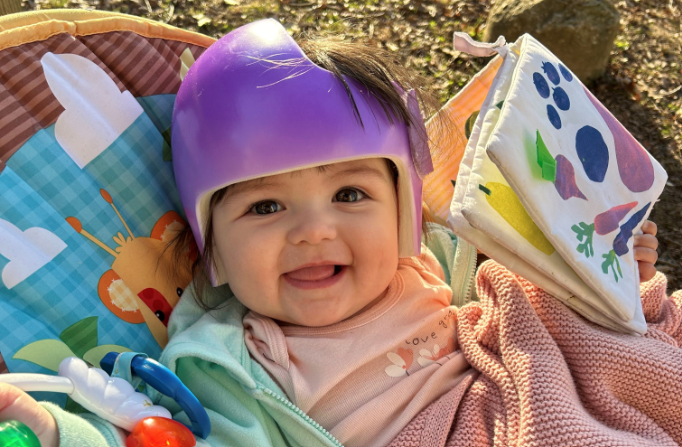
When it comes to parenting, sometimes your gut just knows something. That was the case for Georgia’s parents from the very beginning. Her mom, a registered nurse, noticed something different about Georgia’s head shape and one eye that looked a bit bigger than the other.
At her 1-month check-up, they brought it up. By the 2-month visit, their pediatric nurse practitioner noticed Georgia’s soft spot was smaller than expected — and sent them to see a neurosurgeon.
Even before Georgia’s official diagnosis of left coronal craniosynostosis, Georgia’s parents had a strong feeling that she had a condition where the bones in a baby’s skull close too early.

The Scariest Part? The Unknown.
When they heard the news, their biggest fear was clear — surgery. Georgia was only 11 weeks old, and the thought of skull surgery on their tiny baby was overwhelming. But Georgia’s parents didn’t let fear stop them. They jumped into action, doing lots of research and making tons of phone calls — all in just a week and a half!
They learned that endoscopic surgery (a less invasive option) is usually done before 12 weeks of age. Georgia was diagnosed at 9 weeks, so time was ticking. They reached out to top hospitals and chose Nemours Children’s Hospital in Wilmington, Delaware for her surgery.
A Quick Recovery and a Lot of Support
Surgery might sound scary, but Georgia amazed everyone. She was back home within 24 hours, only needed Tylenol for pain, and had minimal swelling. Her two incisions healed beautifully.
Helmeting: From Challenges to Confidence
After surgery, it was time for her helmet journey — a key part of shaping her head as she continued to grow.
This is where Boston Orthotics & Prosthetics, now an OP Specialty Bracing (OPSB) Clinic, came in. Georgia’s family had been struggling with another clinic, but when they called the OPSB Clinic, everything changed.
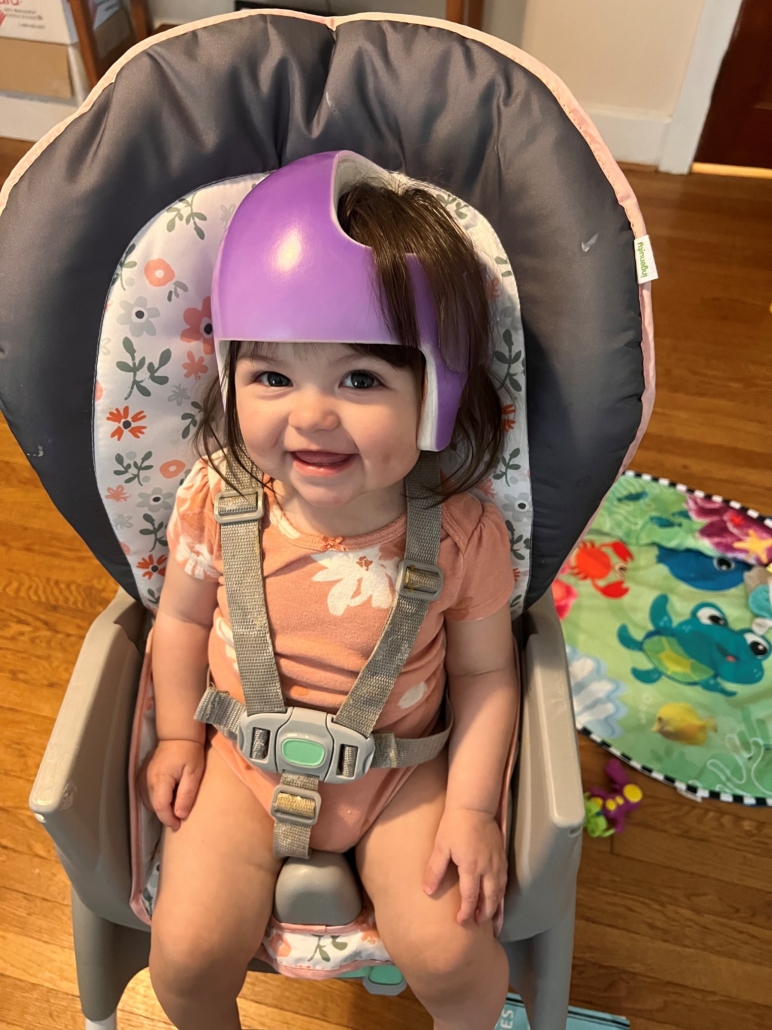
“They were understanding, professional, and truly cared,” Georgia’s mom shared. “They got us in quickly because they knew how important the helmet was after surgery.”
At first, the helmet came with some tricky moments — sleep disruptions and heat rashes were part of the deal. But with the right orthotist, those challenges got easier fast.
Steve Slawinski, Georgia’s orthotist at the OPSB Clinic, made a big difference.
Her mom said, “Steve is passionate about what he does, and Georgia felt that. She got used to the helmet quickly and didn’t mind it at all!”
A Happy Ending (and a Happy Baby!)

Today, Georgia is thriving. She’s strong, resilient, and full of joy. Despite everything she’s been through, she’s still smiling — and her family is so proud of how far she’s come
Advice From One Family to Another
If you’re going through something similar, Georgia’s parents have this advice:
- Trust your instincts — you know your baby best.
- Do your research and don’t be afraid to ask questions.
- Lean on your support system and take it one step at a time.
- Advocate for your child, always.
Georgia’s journey reminds us that even the tiniest warriors can show the biggest strength — especially with the right care, support, and one seriously awesome helmet.
Disclaimer:
OPSB products and products distributed by OrthoPediatrics Corp. and its subsidiaries should be used under the guidance of a qualified healthcare professional. Individual results may vary. The Boston Band® is intended to passively hold prominent cranial regions of an infant’s skull to improve cranial proportion and symmetry in infants aged 3–18 months with nonsynostotic positional plagiocephaly, and for adjunctive use after surgical correction of synostosis. Always follow your doctor’s recommendations and instructions.
